tel
Email
to top

Corrosion Resistance of Seamless Mild Steel Pipes in Marine Environments

Sep 09 2025
share:

Marine environments present one of the most aggressive challenges to structural and pipeline integrity. The combination of saltwater, humidity, atmospheric salinity, and microbial activity creates a potent cocktail for corrosion, significantly shortening the lifespan of metallic components. For industries reliant on piping systems in coastal facilities, offshore platforms, or shipbuilding, selecting the right material is paramount. Seamless mild steel pipes are widely used due to their strength, availability, and cost-effectiveness. However, understanding and mitigating their corrosion susceptibility in marine settings is critical for safe, long-lasting operations. This article explores the corrosion mechanisms affecting these pipes and the strategies, including advanced solutions offered by manufacturers like Cangzhou Lion Technology Co., Ltd., to enhance their durability.
 

Corrosion Resistance of Seamless Mild Steel Pipes in Marine Environments


Performance Advantages of Seamless Mild Steel Pipe in Marine Applications


Despite its inherent susceptibility, seamless mild steel pipe remains a cornerstone material for marine applications, particularly where high pressure and structural integrity are non-negotiable. Its seamless nature provides distinct advantages over welded alternatives:

  • Structural Homogeneity:The absence of a longitudinal weld seam eliminates a potential weak point and initiation site for corrosion, especially pitting and crevice corrosion. The weld heat-affected zone (HAZ) in carbon welded steel pipe can have different metallurgical properties and residual stresses, sometimes making it more vulnerable to certain corrosive attacks.
  • Higher Pressure Rating:Seamless pipes generally have a higher tolerance for internal pressure due to their uniform structure, making them suitable for critical high-pressure fluid transport lines offshore or in desalination plants.
  • Consistent Wall Thickness:Precise manufacturing controls ensure more consistent wall thickness throughout the length of a seamless pipe, providing a more predictable corrosion allowance and lifespan calculation.
  • Smooth Internal Surface:The internal bore of a seamless pipe is typically smoother than that of an as-welded pipe, reducing friction loss in fluid flow and potentially minimizing areas where deposits can accumulate and lead to under-deposit or crevice corrosion.

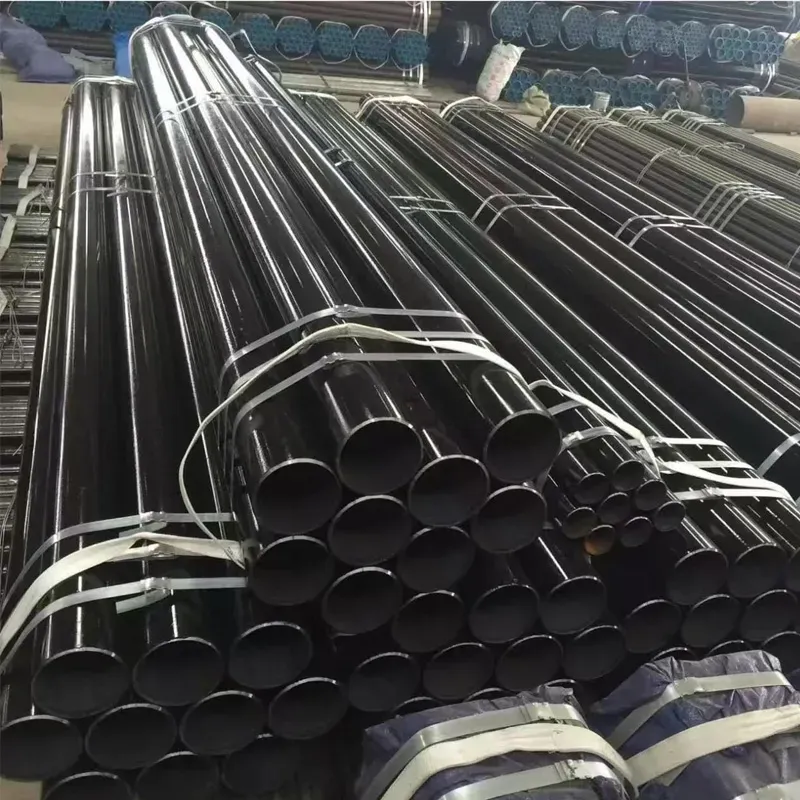
Commonly referred to as black steel seamless pipe in its untreated, mill-finish state, this product serves as the base material upon which various corrosion protection strategies are applied for marine service. Its fundamental strength and reliability make it the preferred choice before protective measures are implemented.


Protective Strategies for Enhancing The Durability of Black steel seamless pipe


To combat the aggressive marine environment, seamless mild steel pipe requires robust protective strategies. These can be broadly categorized:

Protective Coatings:

  • External Coatings:High-performance epoxy, polyurethane, or fusion-bonded epoxy (FBE) coatings create a physical barrier against seawater and atmosphere. Multi-layer systems (e.g., 3LPE - Three Layer Polyethylene) offer enhanced mechanical protection and cathodic disbondment resistance. Black steel seamless pipe serves as the substrate for these coatings.
  • Internal Linings/Cladding:This is where specialized manufacturers like Cangzhou Lion Technology Co., Ltd. excel. Applying a corrosion-resistant alloy (CRA) layer internally protects the mild steel from the conveyed fluid. Techniques include:
  • Mechanical Lining:A thin layer (e.g., 304 stainless steel) is mechanically bonded inside the carbon steel pipe.
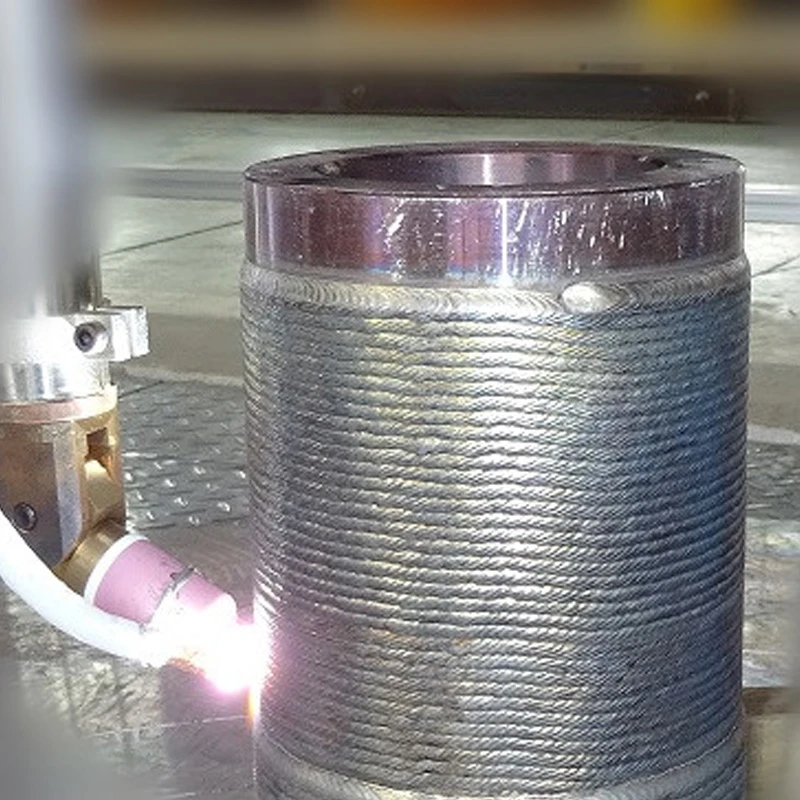
  • Bimetallic Cladding:Using advanced processes like arc additive manufacturing or laser additive manufacturing, a metallurgically bonded layer of CRA (e.g., stainless steel, nickel alloys) is deposited onto the internal surface of the seamless mild steel pipe. This provides superior bond strength and corrosion resistance for demanding applications in oil & gas, chemical processing, and even drinking water transport (e.g., 304 lined pipes). Cangzhou Lion Technology, with its significant annual capacity of 20,000 tons of clad steel pipes and 5,000 tons of pipe fitting additive manufacturing, leverages these technologies effectively.
  • Cathodic Protection (CP):Used primarily for submerged or buried sections. CP systems (sacrificial anodes or impressed current) force the pipe to become the cathode in an electrochemical cell, halting the corrosion reaction. CP is often used in conjunction with coatings.
  • Corrosion Inhibitors:Chemicals added to the fluid stream can form protective films on the internal pipe surface, mitigating corrosion. Effectiveness depends on continuous dosage and monitoring.
  • Material Selection & Design:Minimizing crevices, ensuring good drainage, avoiding galvanic couples, and specifying adequate corrosion allowance are crucial design considerations.
  •  

Cangzhou Lion Technology Co., Ltd., located in the Mengcun County Economic Development Zone, Cangzhou City, Hebei Province, embodies the industrial capability to deliver these advanced solutions. As a high-tech enterprise with a registered capital of 100.8 million yuan and a 75,000 square meter facility, they specialize in the R&D, production, and sales of clad pipes and fittings. Their designation as a supplier to major state-owned energy groups and collaboration with domestic research institutes underscores their technical prowess. Their arsenal includes over 200 sets of production and testing equipment, a 6000T hydraulic press, intermediate frequency induction pushers (DN1200, DN600, DN350), large-scale precision heat treatment furnaces, and more than 100 additive manufacturing units, enabling them to produce large volumes of corrosion-resistant piping solutions reliably.


Product Specifications for Marine-Grade Seamless Mild Steel Pipes 


The base seamless mild steel pipe used in marine applications, often starting as black steel seamless pipe, adheres to stringent international standards to ensure quality and performance suitability before protective measures are applied. Typical specifications include:

Parameter

Specification


Standard

API, ASTM, API 5L, ASTM A106, ASTM A53


Material

API 5L GR A, GR B, GR C; ASTM A53; ASTM A106


Type

Seamless Steel Pipe


Outer Diameter

21.3 – 1828 mm


Thickness

2 – 60 mm


Length

5.8m - 12m


Technique

Hot Rolled or Cold Drawn


Shape

Round


Ends

P.E (Plain End)


Surface

Black Painted


End protector

Customized


Alloy Or Not

Non-Alloy


Application

Fluid Transportation


Special Pipe

API Pipe


Certification

API


Package

Exported Packaging Standard


MOQ

5 Tons


Place of Origin

Cangzhou, China


Payment method

TT/LC


Parameter

Specification

Standard

API, ASTM, API 5L, ASTM A106, ASTM A53

Thickness

2 – 60 mm

Outer Diameter

21.3 – 1828mm

Application

Fluid Transportation

Certification

API

Special Pipe

API Pipe

Material

API 5L GR A, GR B, GR C, ASTM A 53, ASTM A 106

Shape

Round

Ends

P.E (Plain End)

Surface

Black Painted (as one option; often bare/"black" before coating/cladding)

Package

Exported Packaging Standard

Length

5.8m - 12m

MOQ

5 Tons

Place of Origin

Cangzhou, China

Technique

Hot Rolled or Cold drawn

Alloy Or Not

Non-Alloy

Type

Seamless Steel Pipe

End protector

Customized

Payment method

TT/LC

These parameters define the robust starting point for pipes destined for marine service, which are then enhanced through coatings, cladding, or CP systems based on the specific environmental demands.


FAQs about Seamless Mild Steel Pipes


How does the corrosion resistance of seamless mild steel pipe compare to carbon welded steel pipe in seawater?


While both types of mild steel are susceptible to marine corrosion, seamless mild steel pipe generally offers superior resistance in critical areas due to the absence of a longitudinal weld seam. The weld and heat-affected zone (HAZ) in carbon welded steel pipe can be more prone to localized corrosion forms like pitting and crevice corrosion, especially under high stress or in stagnant conditions. The homogeneous structure of seamless pipe provides a more consistent corrosion performance baseline before protective measures are applied.


What does "black steel seamless pipe" mean, and is it suitable for marine use?


Black steel seamless pipe refers to seamless mild steel pipe in its as-manufactured, uncoated state, often with a dark iron oxide scale on the surface ("mill scale"). In this bare form, it is not suitable for direct exposure to marine environments as it will corrode rapidly. However, it serves as the essential base material for marine applications. Its suitability comes after the application of robust external coatings (like FBE, 3LPE) and/or internal linings/cladding (like stainless steel applied via processes such as those used by Cangzhou Lion Technology) or being incorporated into a system with cathodic protection.


What protective methods are most effective for seamless mild steel pipe on offshore platforms?


Offshore platforms demand the highest levels of protection due to constant salt spray, immersion, and atmospheric exposure. A multi-pronged approach is standard:

  • High-Performance External Coatings:Multi-layer systems like 3LPE or thermally sprayed aluminum (TSA) are common for splash zones and atmospheric areas.
  • Internal Cladding/Lining:For pipelines carrying corrosive fluids (including seawater injection), internal cladding with corrosion-resistant alloys (CRA) using metallurgical bonding techniques (e.g., laser cladding) is highly effective and durable. This is a core competency for manufacturers specializing in clad pipe.
  • Cathodic Protection:Essential for submerged structures and buried/pipeline sections, using either sacrificial anodes (zinc, aluminum) or impressed current systems.
  • Corrosion Allowance:Specifying extra wall thickness to account for predicted corrosion loss over the design life.
  •  

Can seamless mild steel pipe be used for submerged marine pipelines?


Yes, seamless mild steel pipe is extensively used for submerged marine pipelines, including flowlines, export lines, and water injection lines. However, it is never used bare. Submerged pipelines rely on a combination of:

  • Concrete Weight Coating:For stability on the seabed.
  • Anti-Corrosion Coating:Typically a multi-layer FBE or polyolefin (3LPP/3LPE) system applied over the black steel seamless pipe substrate to form a barrier.
  • Cathodic Protection:Sacrificial anodes attached along the pipeline to provide electrochemical protection, especially at coating defects. For critical services, the pipe may also be internally clad.
  •  

Why choose clad seamless mild steel pipe over solid alloy pipe for marine corrosion resistance?


Clad pipes, where a seamless mild steel pipe has a thin internal layer (2-5mm typically) of a corrosion-resistant alloy (CRA) like 316L stainless steel or Inconel metallurgically bonded to it, offer a compelling solution:

  • Cost-Effectiveness:Uses a minimal amount of expensive CRA material while leveraging the strength and lower cost of carbon steel.
  • Mechanical Strength:The carbon steel backbone provides the primary structural strength required for high-pressure applications.
  • Corrosion Resistance:The CRA liner provides excellent resistance to the corrosive fluid internally.
  • Weldability:Proper transition techniques allow clad pipes to be welded using qualified procedures, maintaining the CRA protection at joints. This approach is often significantly more economical than using solid CRA pipe, especially for large diameters and high pressures, making it ideal for bulk applications in the energy sector.
  •  

The use of seamless mild steel pipe in marine environments is widespread due to its inherent strength and cost-effectiveness, particularly for high-pressure applications. However, the aggressive nature of seawater and marine atmospheres necessitates rigorous corrosion protection strategies. Understanding the corrosion mechanisms – uniform, pitting, crevice, galvanic, and MIC – is the first step. The structural advantages of seamless pipe over carbon welded steel pipe, particularly the absence of a longitudinal weld seam, provide a more reliable foundation for these protections.The base material, often starting as black steel seamless pipe, is transformed for marine duty through advanced methods: high-performance external coatings, sophisticated internal cladding or lining technologies (like those produced at scale by Cangzhou Lion Technology Co., Ltd.), cathodic protection systems, and sound engineering design. Clad pipes, combining the strength of carbon steel with the corrosion resistance of an internal alloy layer, represent a particularly effective and economical solution for demanding subsea and process applications. Adherence to stringent material specifications and quality standards, as outlined in the product parameters, ensures the reliability of the base pipe before protective measures are applied. By implementing these multi-layered defense strategies, industries can effectively manage corrosion, ensuring the longevity, safety, and cost-efficiency of their marine piping infrastructure.
  • Carbon Semless Steel Pipes

    Carbon Semless Steel Pipes

    Carbon Seamless Steel Pipes are made from high-quality carbon steel and manufactured without welded seams, offering exceptional strength, durability, and resistance to pressure. These pipes are ideal for a wide range of applications, including oil and gas pipelines, construction, automotive, and fluid transportation systems. The seamless design ensures uniformity, higher structural integrity, and improved performance under high pressure and temperature conditions.
    VIEW ALL
  • Laser Clad  Pipe

    Laser Clad Pipe

    Laser clad steel pipes are manufactured using laser cladding technology. This technology involves adding cladding material to the surface of ordinary steel pipe base material, using high-energy-density laser beams to fuse the cladding material with the steel pipe surface, forming a metallurgically bonded cladding layer. These pipes are generally used in compressed air energy storage projects as underground deep well transportation pipes or casings, as well as in oil, natural gas, and geothermal well extraction.
    VIEW ALL
  • Flange

    Flange

    Flange Product Introduction Flanges are used to connect pipes to pipes or pipes to equipment, ensuring a sealed and stable connection. They prevent fluid leakage and can withstand certain pressures and stresses, ensuring reliable connections. Flange nominal diameters range from DN15-DN2000 and beyond, covering various pipeline connection needs. Flanges primarily adhere to international standards such as ASME B16.5-2020, ASME B16.47-2020, and API 6A-2018.
    VIEW ALL
To create value for customers!
Cangzhou Leo Technology Co., Ltd. is located in Mengcun County Economic Development Zone, Cangzhou City, Hebei Province. It is a specialized high-tech enterprise that integrates the research and development, production, and sales of composite pipes and fittings.
News
The company regards product quality as the life of the enterprise, establishes a sound quality management system in accordance with the requirements of industry and national standards, controls all aspects of input and output in the whole process, pays attention to every detail, and ensures that the product delivery pass rate is 100%.
Comprehensive Guide to Steel Pipes and Fittings | Benefits & Global Applications

Comprehensive Guide to Steel Pipes and Fittings | Benefits & Global Applications

Steel Pipes and Fittings: Backbone of Global Infrastructure Steel pipes and fittings might sound lik
Understanding Welded Steel Pipe: Applications, Benefits, and Innovations

Understanding Welded Steel Pipe: Applications, Benefits, and Innovations

The Quiet Power of Welded Steel Pipe in Today's World If you’re here, you’re probably wo
The Essential Guide to Tube and Steel: Applications, Benefits, and Future Trends

The Essential Guide to Tube and Steel: Applications, Benefits, and Future Trends

Understanding Tube and Steel: Why It Matters in a Complex World If you haven’t given much thou
Thin Wall Steel Pipe – Lightweight Strength for Global Infrastructure Solutions

Thin Wall Steel Pipe – Lightweight Strength for Global Infrastructure Solutions

Understanding Thin Wall Steel Pipe: Why It Matters Globally The term “thin wall steel pipe&rdq
Thick Wall Steel Tubing: Durable Solutions for Global Pipelines and Infrastructure

Thick Wall Steel Tubing: Durable Solutions for Global Pipelines and Infrastructure

The Growing Importance of Thick Wall Steel Tubing: A Practical Overview Sometimes when you hear &ldq
Thick Wall Steel Pipe - Durable Industrial Piping for High-Pressure Applications

Thick Wall Steel Pipe - Durable Industrial Piping for High-Pressure Applications

Understanding Thick Wall Steel Pipe: What It Is and Why It Matters Globally If you’ve ever enc
tel email tel top

If you are interested in our products, you can choose to leave your information here, and we will be in touch with you shortly.