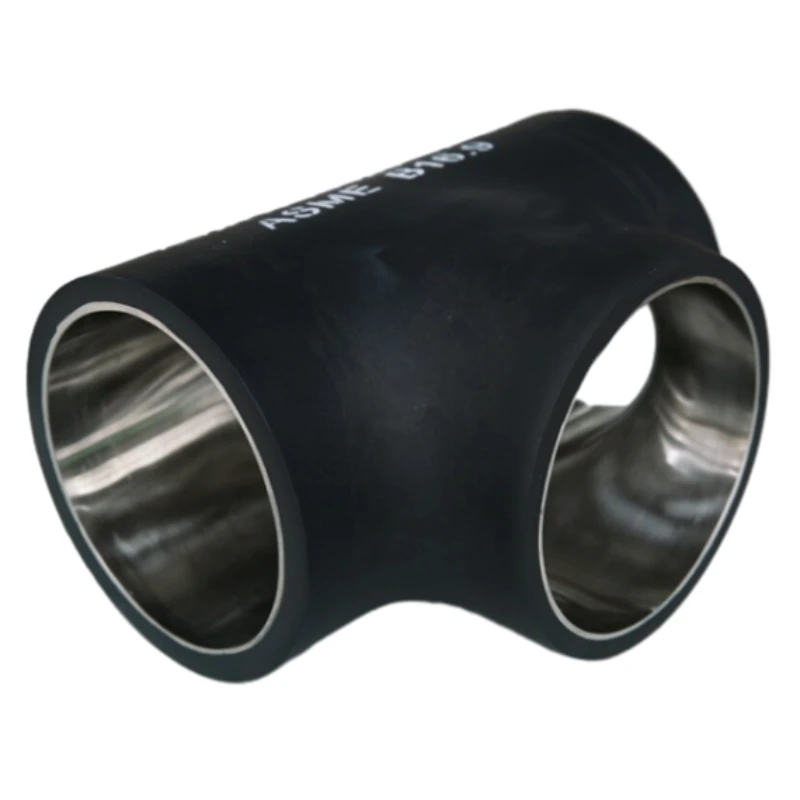
Optimizing Industrial Infrastructure with Advanced Steel Pipes
In demanding industrial environments, the integrity and longevity of piping systems are paramount. Businesses seeking reliable and high-performance steel pipes for sale are increasingly turning to advanced solutions that offer superior resistance to corrosion, abrasion, and high temperatures. Among these, Overlay Welding Clad Steel Pipes stand out as a premier choice, engineered to provide extended service life and reduced maintenance costs in critical applications. This comprehensive guide explores the multifaceted aspects of modern industrial piping, from cutting-edge manufacturing processes to real-world application advantages, designed for B2B decision-makers and engineering professionals.
Industry Trends in High-Performance Piping
The global industrial piping market is undergoing significant transformation, driven by a confluence of factors including stringent environmental regulations, the need for enhanced operational efficiency, and the development of new material science. Key trends include:
- Advanced Material Integration: There's a growing demand for pipes fabricated from or enhanced with exotic alloys and composite materials to withstand extreme conditions. This includes specialized steels, nickel alloys, and titanium.
- Sustainability and Lifecycle Cost Optimization: Industries are prioritizing solutions that offer longer service life and lower total cost of ownership, reducing the frequency of replacements and associated environmental impact. This drives interest in highly durable options like overlay welded pipes.
- Digitalization in Manufacturing and Monitoring: Industry 4.0 principles are being applied to pipe manufacturing, enabling greater precision, quality control, and the ability to track pipe performance in real-time through IoT sensors.
- Increasing Use of Welded Pipe: Advancements in welding technology have made welded pipe increasingly reliable for high-pressure and high-temperature applications, offering cost efficiencies over seamless alternatives for certain specifications. Similarly, demand for stainless steel welded pipe continues to rise due to its inherent corrosion resistance.
- Focus on Customization: Standard solutions often fall short in specialized projects. Manufacturers offering tailored dimensions, material combinations, and cladding solutions gain a competitive edge.
These trends highlight a shift towards specialized, durable, and cost-effective piping solutions, underscoring the value of sophisticated options like Overlay Welding Clad Steel Pipes.
Process Flow: Manufacturing Overlay Welding Clad Steel Pipe
The production of Overlay Welding Clad Steel Pipe is a highly specialized process, combining the mechanical strength of a base material with the superior corrosion or wear resistance of a cladding layer. This innovative approach significantly extends the service life of pipes in aggressive environments. The typical process flow includes:
1. Material Preparation
- Base Material Selection: High-strength carbon steel or low-alloy steel (e.g., API 5L Grade B/X42/X52/X65, ASTM A106 Grade B) is chosen for its mechanical properties, providing structural integrity.
- Cladding Material Selection: Corrosion-resistant alloys (CRAs) like Inconel 625, Hastelloy C276, Monel 400, or various grades of stainless steel welded pipe materials (e.g., 304L, 316L, Duplex 2205) are selected based on the specific corrosive or abrasive conditions of the application.
- Surface Preparation: Both the base pipe internal surface and cladding material are thoroughly cleaned and prepared to ensure optimal bonding during welding. This often involves shot blasting or grinding to remove contaminants and create a suitable surface profile.
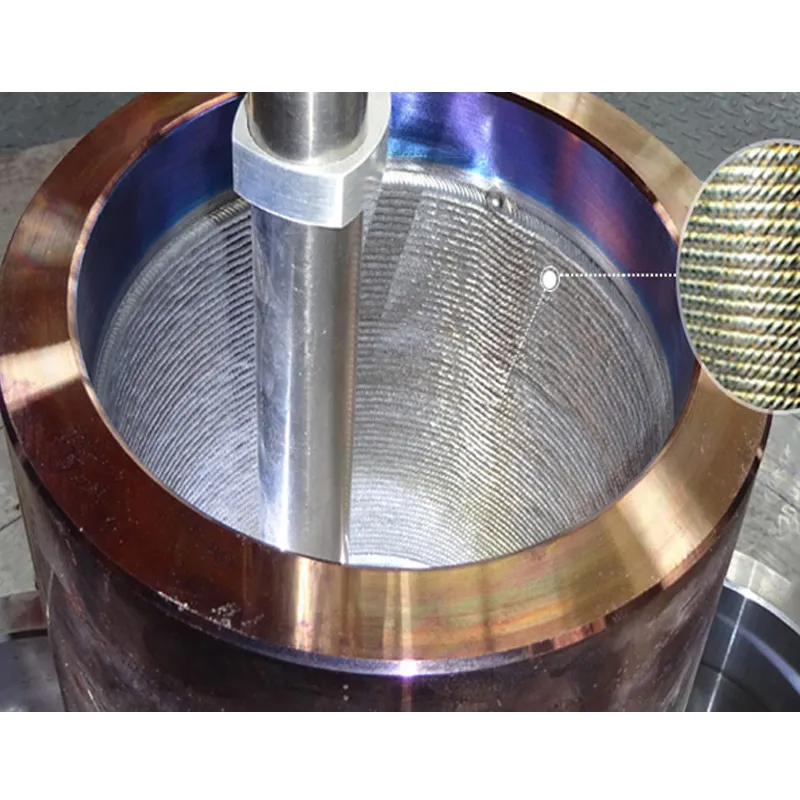
2. Overlay Welding (Cladding Process)
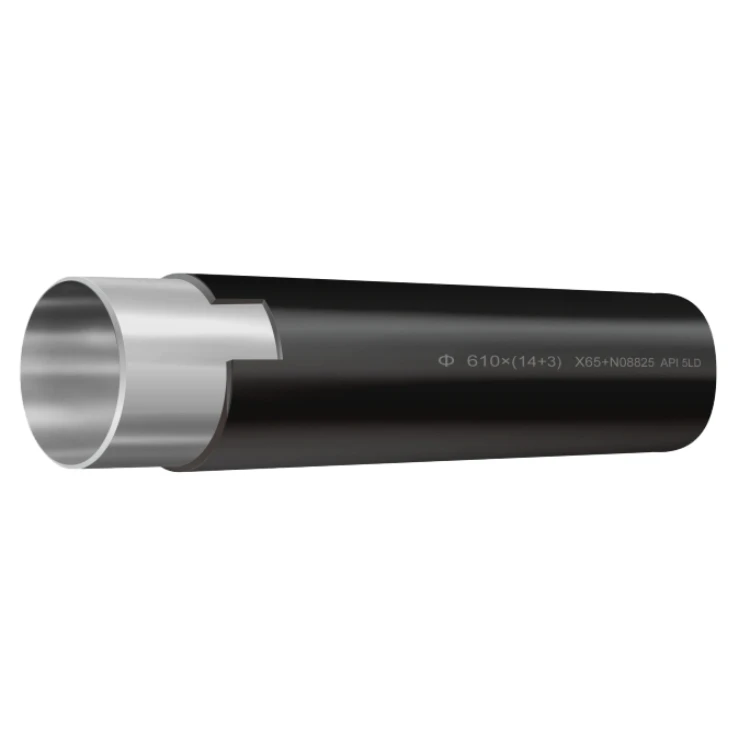
This is the core of the manufacturing process, employing advanced welding techniques to deposit the CRA layer onto the internal surface of the base pipe.
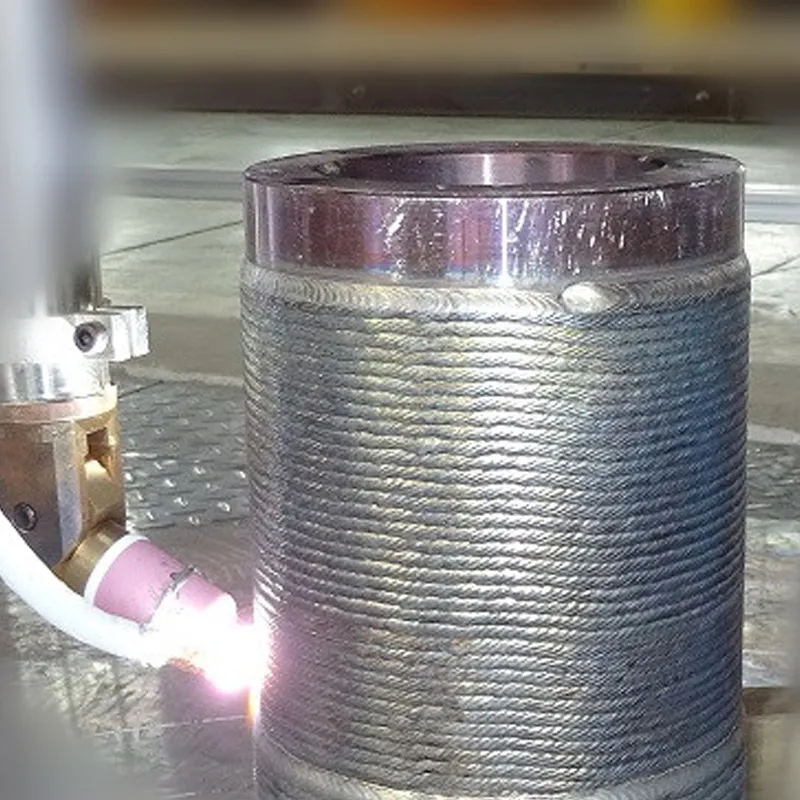
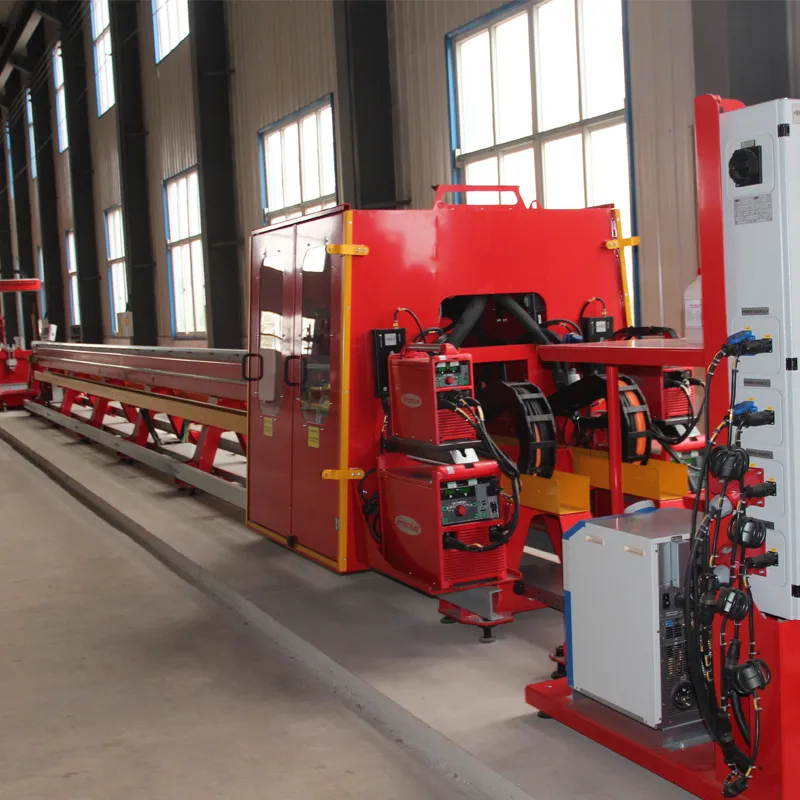
- Welding Method: Automated processes such as Submerged Arc Welding (SAW), Gas Metal Arc Welding (GMAW), or Electroslag Welding (ESW) are typically used for their precision, control over dilution, and consistent deposition rates. For smaller diameters, Gas Tungsten Arc Welding (GTAW) may be employed.
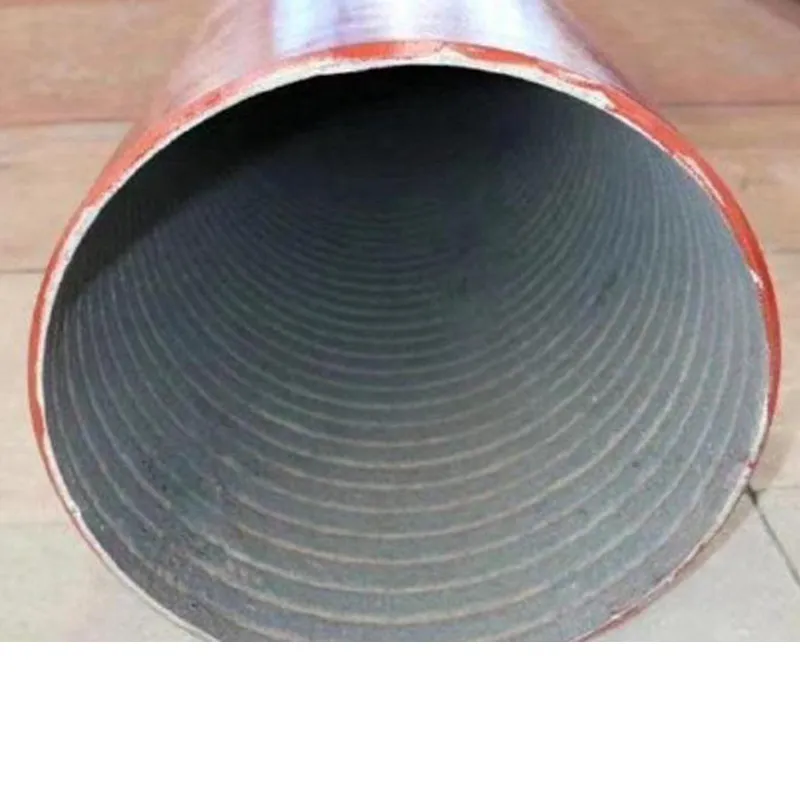
- Controlled Deposition: Multiple passes are applied to achieve the desired cladding thickness, typically ranging from 3mm to 10mm. Strict control over welding parameters (current, voltage, travel speed, oscillation) is maintained to minimize dilution of the cladding material with the base metal, ensuring the integrity of the corrosion-resistant layer.
3. Post-Welding Heat Treatment
After cladding, the pipe undergoes heat treatment to relieve residual stresses, refine grain structures, and optimize the mechanical properties of both the base and clad layers. This step is critical for ensuring the long-term performance and integrity of the steel pipes for sale.
4. Machining and Finishing
- CNC Machining: The clad layer is precisely machined to achieve the specified internal diameter and surface finish. End preparation (beveling) is also performed for seamless integration into larger piping systems.
- External Coating: Depending on external environmental conditions, an external protective coating (e.g., 3LPE, FBE, epoxy) may be applied.
5. Testing and Quality Assurance
Rigorous testing is essential to ensure compliance with international standards such as ISO 15156 (NACE MR0175) for sour service, ASTM, ASME, and API. Key tests include:
- Non-Destructive Testing (NDT): Ultrasonic testing (UT), eddy current testing, radiographic testing (RT), and magnetic particle inspection (MPI) are used to detect internal flaws, ensure bond integrity between base and clad layers, and verify cladding thickness.
- Destructive Testing: Bend tests, tensile tests, hardness tests, and chemical analysis confirm material properties and weld quality. Corrosion tests (e.g., ASTM G48) verify the resistance of the clad layer.
- Hydrostatic Testing: Each pipe is subjected to high-pressure water to confirm structural integrity and leak-tightness.
This meticulous manufacturing process ensures that the resulting pipes offer exceptional service life, often exceeding 25-30 years in harsh conditions, particularly benefiting target industries such as petrochemical, oil and gas, metallurgy, and water supply & drainage. The primary advantages demonstrated are significant energy savings due to reduced friction, vastly improved corrosion resistance, and prolonged operational uptime.
Technical Specifications of Overlay Welding Clad Steel Pipe
Overlay Welding Clad Steel Pipes are engineered to provide a robust solution where conventional materials fail due to severe operating conditions. Understanding their technical parameters is crucial for optimal selection and performance. The unique structure combines a high-strength carbon steel outer layer with a corrosion-resistant alloy inner layer, offering a best-of-both-worlds scenario.
Typical Product Specification Parameters:
| Parameter |
Specification Range |
Notes |
| Base Material |
API 5L (Gr. B, X42, X52, X65, X70), ASTM A106 Gr. B, ASTM A333 Gr. 6 |
Selected for mechanical strength, pressure rating. |
| Cladding Material |
UNS N06625 (Inconel 625), UNS N10276 (Hastelloy C276), UNS N04400 (Monel 400), S31603 (316L), S32205 (Duplex 2205) |
Selected for corrosion/abrasion resistance in contact with fluid. |
| Cladding Thickness |
3 mm to 10 mm (or as per client requirement) |
Critical for service life and resistance. |
| Outer Diameter (OD) |
DN50 (2 inch) to DN1200 (48 inch) |
Customizable based on project scope. |
| Wall Thickness |
Sch. 40 to Sch. XXS (5 mm to 100 mm+) |
Determines pressure rating alongside material. |
| Operating Temperature |
-40°C to +550°C (-40°F to +1022°F) |
Varies with cladding and base material selection. |
| Max Operating Pressure |
Up to 2500 PSI (17.2 MPa) or higher for specific designs |
Dependent on OD, wall thickness, and base material grade. |
| Standards Compliance |
API 5LD, ASME B31.3/B31.4/B31.8, NACE MR0175/ISO 15156 |
Ensures quality and safety for specific applications. |
These specifications highlight the versatility and robust nature of overlay welding clad steel pipes for sale, making them suitable for a vast array of critical industrial applications where both structural integrity and extreme environmental resistance are non-negotiable.
Application Scenarios and Technical Advantages
The unique combination of strength and corrosion resistance offered by Overlay Welding Clad Steel Pipes makes them indispensable across a wide spectrum of demanding industrial applications.
Key Application Areas:
- Oil and Gas Industry: Crucial for upstream exploration and production, midstream transportation (pipelines carrying sour crude or corrosive natural gas), and downstream refining. Used in flowlines, risers, subsea pipelines, and processing units where H2S, CO2, and chlorides are present.
- Chemical and Petrochemical Plants: Transporting aggressive chemicals, acids, and high-temperature process fluids. Essential for reactors, heat exchangers, and distillation columns handling corrosive media.
- Power Generation: Used in flue gas desulfurization (FGD) systems, cooling water systems, and steam lines where resistance to erosion, corrosion, and high temperatures is critical.
- Mining and Metallurgy: Conveying abrasive slurries, corrosive reagents, and high-temperature gases. The robust nature of clad pipes minimizes wear and tear.
- Desalination Plants: Handling highly corrosive seawater and brine solutions, ensuring longevity in critical intake and discharge lines, as well as internal plant piping.
- Water Supply & Drainage: While less common for potable water, specific industrial wastewater treatment plants benefit from clad pipes due to the aggressive nature of effluents.
Technical Advantages:
- Superior Corrosion Resistance: The CRA cladding layer provides unparalleled protection against various forms of corrosion, including pitting, crevice corrosion, stress corrosion cracking, and general corrosion from aggressive media. This significantly outperforms conventional carbon steel or even solid stainless steel welded pipe in some extremely harsh environments.
- Enhanced Abrasion/Erosion Resistance: Certain cladding materials are specifically chosen for their hardness and resistance to erosion, making them ideal for transporting abrasive slurries or high-velocity fluids.
- Cost-Effectiveness: While the initial investment might be higher than for plain carbon steel, the extended service life (often 3-5 times longer), reduced maintenance, and avoidance of costly downtime lead to significant lifecycle cost savings. Using clad pipes is more economical than solid CRA pipes for large diameters and long lengths.
- High Pressure and Temperature Capabilities: The strong carbon steel base pipe handles high internal pressures and external loads, while the clad layer maintains integrity at elevated temperatures, expanding the operational envelope.
- Improved Safety and Environmental Performance: Reduced risk of leaks and failures translates to enhanced operational safety, minimizes environmental contamination, and ensures compliance with strict regulatory standards.
- Material Efficiency: Cladding allows for strategic placement of expensive corrosion-resistant alloys only where needed, optimizing material usage without compromising performance.
These distinct advantages firmly position overlay welding clad steel pipes for sale as a strategic investment for industries facing challenging operational conditions, ensuring long-term reliability and economic viability.
Vendor Comparison and Customized Solutions
Selecting the right supplier for specialized piping solutions, particularly for complex products like clad steel pipes for sale, requires careful evaluation. The capabilities of a composite pipe manufacturer can vary significantly.
Key Factors for Vendor Comparison:
| Feature/Criterion |
Leading Manufacturer (e.g., Lion Pipeline) |
Standard Supplier |
| Technical Expertise & R&D |
In-house metallurgical team, continuous innovation, deep understanding of material interactions. |
Limited R&D, reliance on basic specifications. |
| Certifications & Quality Systems |
ISO 9001, API 5LD, ASME, NACE MR0175, specific client approvals, comprehensive QC/QA. |
Basic ISO certification, less stringent testing. |
| Customization Capabilities |
Extensive range of base/clad materials, custom diameters/lengths, specialized heat treatments, complex geometries. |
Limited to standard material combinations and dimensions. |
| Project Management & Support |
Dedicated project managers, technical consultation, after-sales support, installation guidance. |
Transactional support, minimal technical consultation. |
| Delivery & Lead Time |
Optimized production lines, strong supply chain, reliable lead times, potential for expedited orders. |
Variable lead times, limited flexibility. |
Customized Solutions for Complex Projects:
The versatility of overlay welding technology allows for highly customized solutions tailored to specific project requirements. Leading manufacturers understand that off-the-shelf solutions rarely suffice for extreme industrial applications. Customization can include:
- Tailored Material Combinations: Selecting specific base materials (e.g., high-yield strength steels) and cladding alloys (e.g., various grades of Inconel, Hastelloy, Duplex stainless steel welded pipe materials) to perfectly match the operational environment's pressure, temperature, and corrosive potential.
- Specific Dimensions and Lengths: Producing pipes with non-standard diameters, wall thicknesses, and custom lengths to minimize field welds and optimize system design.
- Cladding Thickness Optimization: Adjusting the clad layer thickness based on expected wear or corrosion rates to balance cost and service life.
- Specialized End Preparations: Custom bevels, flanges, or connection types to integrate seamlessly with existing or new infrastructure.
- Enhanced External Coatings: Applying specialized external coatings (e.g., anti-corrosion, insulation) for additional protection against external environmental factors.
By offering these extensive customization options, reputable suppliers ensure that clients receive precisely engineered steel pipes for sale that deliver optimal performance and maximize project ROI.
Application Case Studies: Proven Performance
Real-world application demonstrates the tangible benefits of Overlay Welding Clad Steel Pipes in critical infrastructure projects. These case studies highlight their reliability and long-term cost-effectiveness.
Case Study 1: Deepwater Offshore Production Flowlines
- Challenge: An international energy major required flowlines for a new deepwater oil and gas field. The extracted fluids contained high concentrations of H2S, CO2, and chlorides at elevated pressures (1500 PSI) and temperatures (120°C). Conventional welded pipe or solid stainless steel was deemed insufficient for the projected 25-year design life without significant corrosion and integrity risks.
- Solution: Overlay welding clad steel pipes were supplied, featuring an API 5L X65 base pipe with an internal Inconel 625 cladding layer (6mm thickness). The pipe sections were manufactured to NACE MR0175/ISO 15156 standards and subjected to stringent hydrostatic and NDT inspections.
- Results: Over five years into operation, the clad pipelines have shown zero signs of internal corrosion or degradation, significantly outperforming initial projections for alternative materials. This minimized costly interventions and ensured continuous production, translating to estimated savings of over $50 million in maintenance and potential revenue loss.
Case Study 2: Chemical Processing Plant Effluent Lines
- Challenge: A major chemical producer faced recurring failures in their effluent discharge lines, which handled a complex mix of sulfuric acid, chlorides, and various organic compounds. Standard stainless steel welded pipe required frequent replacement, causing significant downtime and environmental concerns.
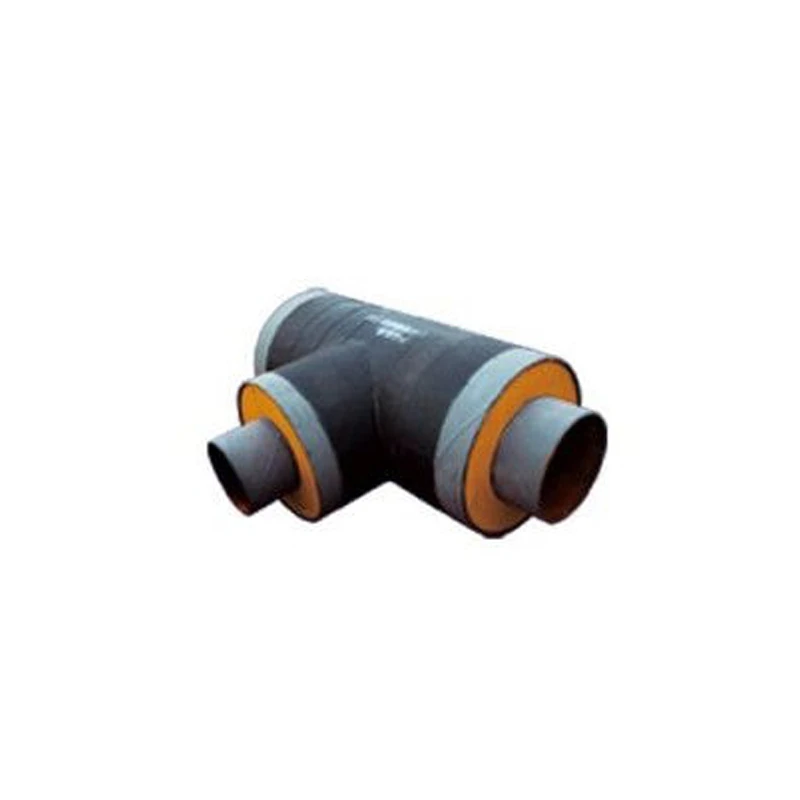
- Solution: The plant transitioned to clad steel pipes with an ASTM A106 Grade B base and a Hastelloy C276 internal cladding. The pipe system included clad elbows and fittings, ensuring a fully protected flow path.
- Results: The new piping system has been in service for 10 years without any reported corrosion-related failures. The plant achieved a 70% reduction in maintenance costs for this specific section and eliminated unscheduled shutdowns related to pipeline integrity, validating the initial investment in high-quality steel pipes for sale.
Ensuring Quality, Reliability, and Trustworthiness
A commitment to quality and trustworthiness is fundamental for any leading supplier of industrial piping solutions. This is built upon a foundation of certifications, rigorous testing, transparent operations, and unwavering customer support.
Authoritative Certifications and Quality Assurance:
Our manufacturing processes adhere to the highest international standards, ensuring that every product delivers on its promise of performance and durability:
- ISO 9001:2015 Certified: Demonstrates a robust quality management system across all stages of production.
- API 5LD Certified: Specific to clad or lined steel pipes, ensuring compliance with petroleum and natural gas industry standards for reliability in critical applications.
- ASME Standards: Adherence to American Society of Mechanical Engineers codes (e.g., ASME B31.3 for Process Piping) guarantees safe design and fabrication.
- NACE MR0175/ISO 15156 Compliance: Material selection and testing protocols specifically address sulfide stress cracking resistance for sour service environments.
- Partner Client Approvals: Approved vendor status with major oil & gas companies, chemical producers, and engineering contractors worldwide.
Frequently Asked Questions (FAQ)
Q: What is the typical service life of an Overlay Welding Clad Steel Pipe?
A: With proper material selection and installation, clad pipes can achieve a service life of 25-30 years or more, significantly exceeding that of conventional pipes in aggressive environments.
Q: Can these pipes be used in high-temperature applications?
A: Yes, the selection of both base and cladding materials is critical for high-temperature service. Our clad pipes are designed for operating temperatures up to 550°C (1022°F) or even higher for specific alloy combinations.
Q: How does the cost of clad pipe compare to solid CRA pipe?
A: For larger diameters and thicker walls, clad pipes are often significantly more cost-effective than solid corrosion-resistant alloy (CRA) pipes. They offer the same internal corrosion resistance at a fraction of the material cost, making them an economically viable choice for large-scale projects seeking steel pipes for sale.
Lead Time & Fulfillment
Lead times for Overlay Welding Clad Steel Pipes typically range from 12 to 24 weeks, depending on project complexity, material availability, and order volume. Our efficient project management and robust supply chain ensure timely delivery, and we offer expedited options for urgent requirements. We prioritize transparent communication regarding production schedules and logistics, providing regular updates to our clients from order placement to final delivery.
Warranty Commitments
All our Overlay Welding Clad Steel Pipes come with a comprehensive warranty covering manufacturing defects and material integrity. Our standard warranty period is 12-18 months from delivery or 12 months from installation, whichever comes first, against defects in materials and workmanship. Specific project warranties can be negotiated based on contract terms, reflecting our confidence in the quality and durability of our products.
Customer Support
Our commitment extends beyond delivery. We provide comprehensive after-sales support, including technical assistance for installation, welding procedures for field joints, and operational guidance. Our team of experienced engineers is available for consultation to address any challenges or queries, ensuring the successful long-term performance of our steel pipes for sale in your critical applications. We believe in building lasting partnerships through exceptional service and reliable products.
Conclusion
The evolving demands of modern industrial sectors necessitate piping solutions that are not only robust but also economically sustainable. Overlay Welding Clad Steel Pipes represent the pinnacle of this evolution, offering an unparalleled combination of strength, corrosion resistance, and longevity. By leveraging advanced manufacturing processes, adhering to stringent quality standards, and providing bespoke solutions, leading manufacturers ensure that their steel pipes for sale are ideal for the most challenging applications in oil and gas, chemical processing, power generation, and beyond. Investing in these sophisticated pipes translates directly into enhanced operational reliability, reduced lifecycle costs, and greater peace of mind for critical infrastructure projects.
References
- National Association of Corrosion Engineers (NACE International). NACE MR0175/ISO 15156 - Petroleum and natural gas industries—Materials for use in H2S-containing environments in oil and gas production.
- American Petroleum Institute (API). API Specification 5LD - Specification for CRA Clad or Lined Steel Pipes.
- American Society of Mechanical Engineers (ASME). ASME B31.3 - Process Piping.
- ASM Handbook, Volume 13A: Corrosion: Fundamentals, Testing, and Protection. ASM International.
- The Welding Institute (TWI). Advanced Welding Processes for Clad Steels.