Tee products are essential pipe fittings used to connect three sections of piping, forming a "T" shape. Available in various materials like carbon steel, stainless steel, and alloy steel, they are designed for use in systems requiring the diversion or junction of fluid flow. Selecting the correct wall thickness schedule is paramount for ensuring the integrity, safety, and longevity of the piping system. This decision directly impacts the fitting's ability to withstand internal pressure, external loads, corrosion allowances, and the specific demands of the service environment. For manufacturers and suppliers serving large-scale industrial projects, understanding and applying the correct schedules is a fundamental aspect of product quality and reliability.
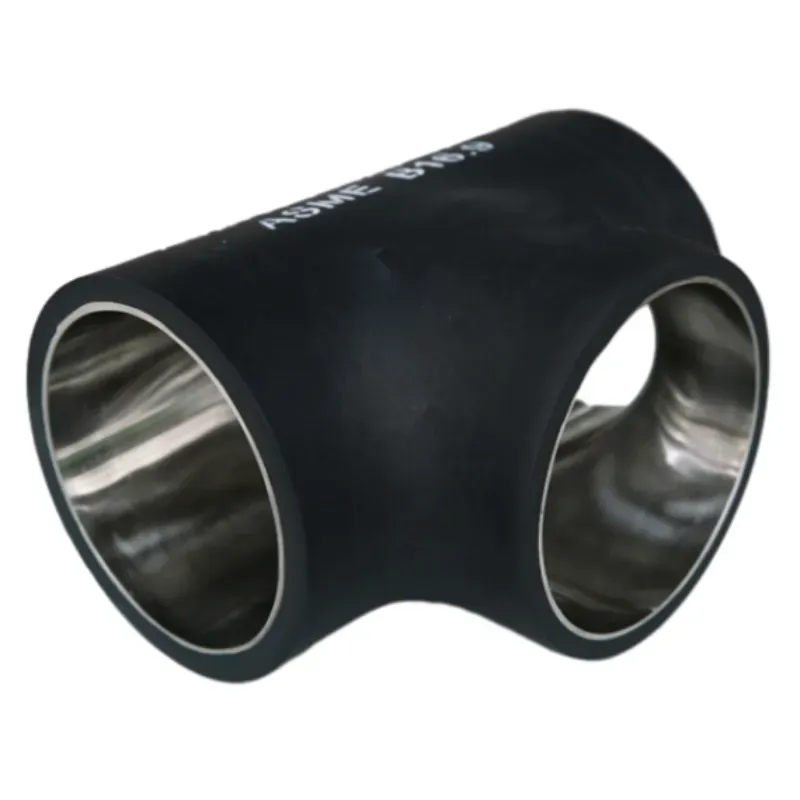
carbon steel tee fittings are ubiquitous due to their cost-effectiveness, strength, and versatility. When determining the wall thickness schedule for a carbon steel tee, several specific factors come into play:
Manufacturers serving major infrastructure projects must rigorously apply these factors. Cangzhou Lion Technology Co., Ltd., located in Mengcun County Economic Development Zone, Cangzhou City, Hebei Province, leverages its position as a professional high-tech enterprise and designated supplier to major energy enterprise groups under the SASAC to deeply understand these critical selection criteria. Their extensive experience in producing clad pipes and fittings, including those with carbon steel substrates, informs their capability to deliver carbon steel tee products meeting precise schedule requirements for demanding applications.
For applications involving extreme pressures, high temperatures, severe shock, or vibration, forged steel tee fittings offer superior integrity. Forging refines the grain structure of the metal, resulting in enhanced mechanical properties (strength, toughness, fatigue resistance) compared to fabricated or cast fittings. This inherent strength allows forged steel tee fittings to handle higher stresses, often enabling the use of a thinner wall for the same pressure rating compared to a cast fitting, or providing a higher safety margin at standard schedules. Common standards include ASME B16.11 (Socket Weld and Threaded) and MSS SP-79, SP-83, SP-97.
Schedule selection for forged steel tee fittings is often expressed via pressure class ratings (e.g., Class 3000, 6000, 9000) rather than pipe schedules. However, the wall thickness is intrinsically linked to this pressure class and the material grade (e.g., ASTM A105 carbon steel, A182 F304 stainless steel). Key considerations include:
Cangzhou Lion Technology Co., Ltd. possesses significant forging capabilities integral to their product range. With an annual production capacity of 10,000 tons for pressure piping components and equipped with a formidable 6000T heavy-duty hydraulic press, they have the infrastructure to manufacture robust forged steel tee fittings capable of meeting the stringent schedule (pressure class) requirements of critical high-pressure services in oil and gas, power generation, and chemical plants. Their large-scale natural gas heat treatment furnaces ensure precise heat treatment, crucial for achieving the desired metallurgical properties in forged components.
A stainless steel cross tee (essentially a double tee, forming a "+" shape) connects four pipes, allowing flow in four directions. While similar principles of pressure, corrosion, and material strength apply, its geometry introduces unique stress concentration factors, particularly at the branch intersections. This complexity necessitates careful attention during wall thickness schedule selection:
Cangzhou Lion's advanced manufacturing capabilities are highly relevant here. Their expertise in clad technology (e.g., carbon steel with stainless or non-metallic liners) and particularly their significant additive manufacturing capacity (over 100 sets of equipment, 5,000 tons annual capacity for inner wall additive manufacturing) provide innovative solutions. This technology allows for precise deposition of material, enabling the creation of complex geometries like stainless steel cross tee fittings with optimized, reinforced wall sections and potentially clad interiors for superior corrosion resistance where needed, all meeting rigorous dimensional and schedule requirements for large-scale industrial supply.
The primary factor is the internal design pressure combined with the design temperature. ASME piping codes provide formulas to calculate the minimum required thickness based on these, the material's allowable stress, and weld joint efficiency. However, corrosion allowance often becomes the governing factor, especially in services where carbon steel is susceptible to degradation, potentially requiring a schedule significantly thicker than the pressure calculation alone dictates.
A forged steel tee is typically specified for higher pressure applications (often indicated by socket weld or threaded connections per ASME B16.11), smaller sizes (generally NPS 4 and below), services with severe shock or vibration (where the superior toughness of forgings is beneficial), or when specific dimensional configurations are needed. Their inherent strength often allows them to meet high-pressure class ratings with robust construction.
Yes, due to the geometry involving four intersecting bores. The areas where the branches meet the run (crotch areas) experience high stress concentrations. Standards require adequate reinforcement in these zones. Consequently, manufacturers design stainless steel cross tee fittings with inherently thicker walls, particularly at the outlets and body intersections, compared to a single-run tee of the same nominal size and schedule to meet reinforcement rules and ensure structural integrity.
The material grade directly impacts its allowable stress value at the design temperature (defined in ASME codes). Higher strength materials (e.g., certain alloy steels, higher grades of stainless steel) have higher allowable stresses. This means that for the same pressure and temperature, a fitting made from a higher strength material can have a thinner minimum wall thickness than one made from a lower strength material (like standard carbon steel), potentially allowing a lighter schedule. However, corrosion resistance requirements may override this.
While ASME B16.9 (buttweld) and B16.11 (forged) are widely adopted international standards, other standards exist (e.g., EN, JIS, GOST). Dimensions and schedules/pressure classes may have slight variations. It's crucial to specify the governing standard (e.g., ASME B16.9 Sch 40) when ordering. Reputable manufacturers like Cangzhou Lion Technology Co., Ltd., experienced in supplying major global projects, are adept at producing to various international standards as required by the project specifications.
Selecting the correct wall thickness schedule for carbon steel tees, forged steel tees, and stainless steel cross tees is a critical engineering decision impacting piping system safety, performance, and cost. It requires careful consideration of design pressure, temperature, fluid service (especially corrosion), material properties, applicable codes, and the specific fitting geometry. Manufacturers with robust capabilities, such as Cangzhou Lion Technology Co., Ltd., bring essential expertise and advanced production technologies – including significant forging capacity, precision heat treatment, and innovative additive manufacturing – to the table. Their role as a large-scale supplier to major energy enterprises underscores the importance of reliably producing fittings that meet precise dimensional and schedule requirements, ensuring the integrity of vast industrial piping networks. Understanding the factors outlined in this article enables more informed specification and procurement of these vital components.
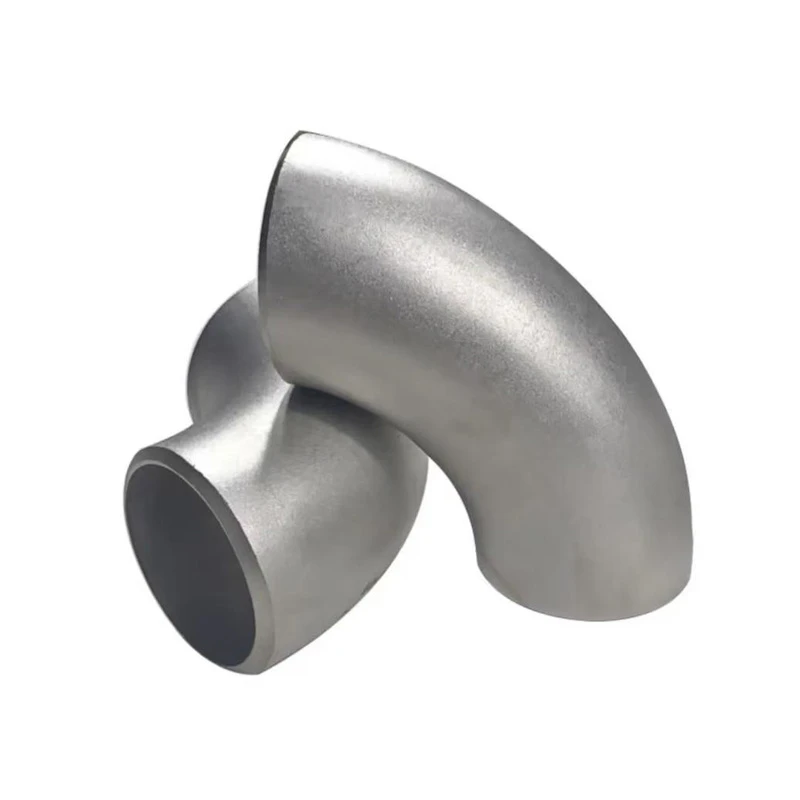
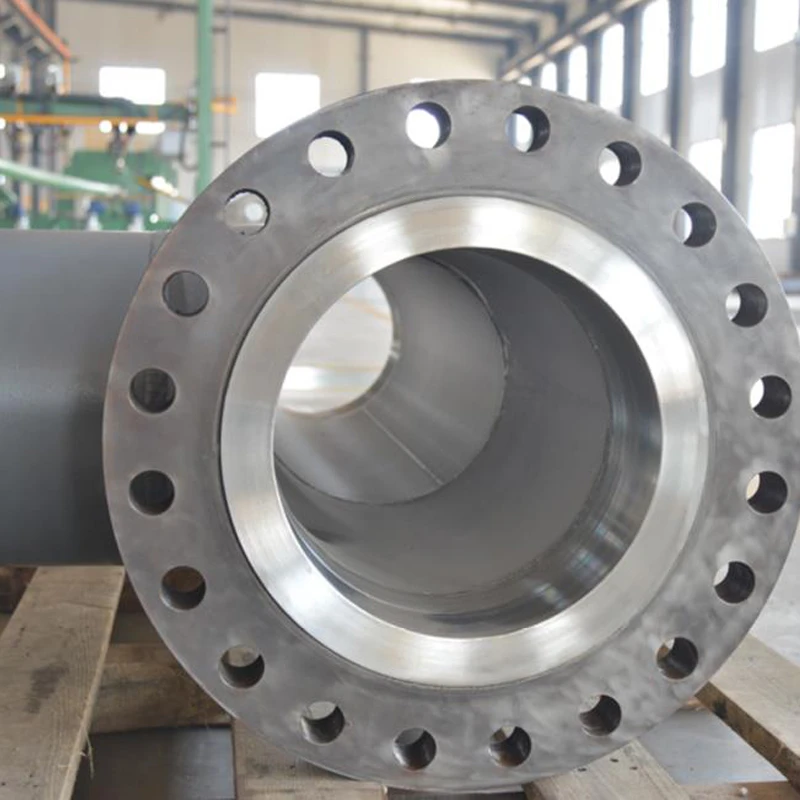
Factory Prefabricated Products
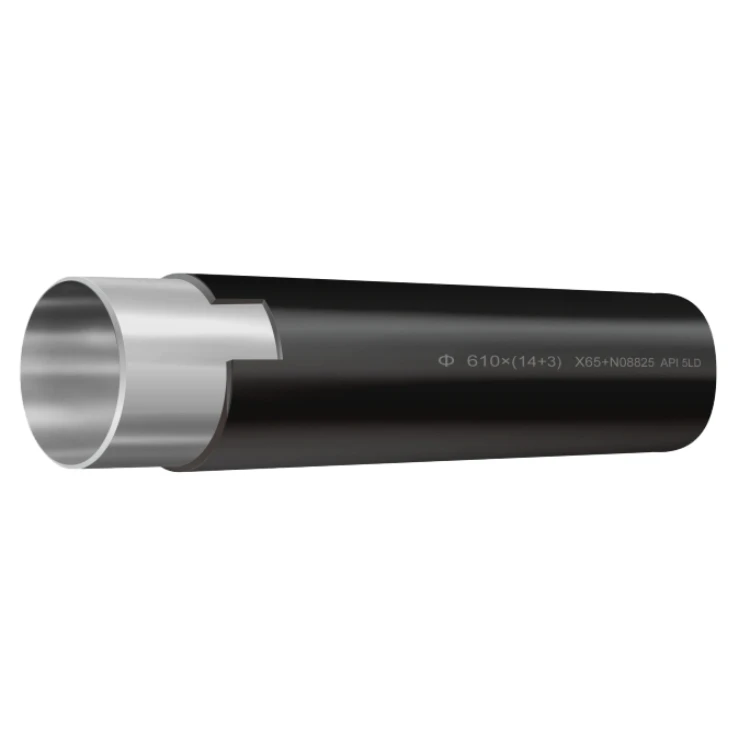
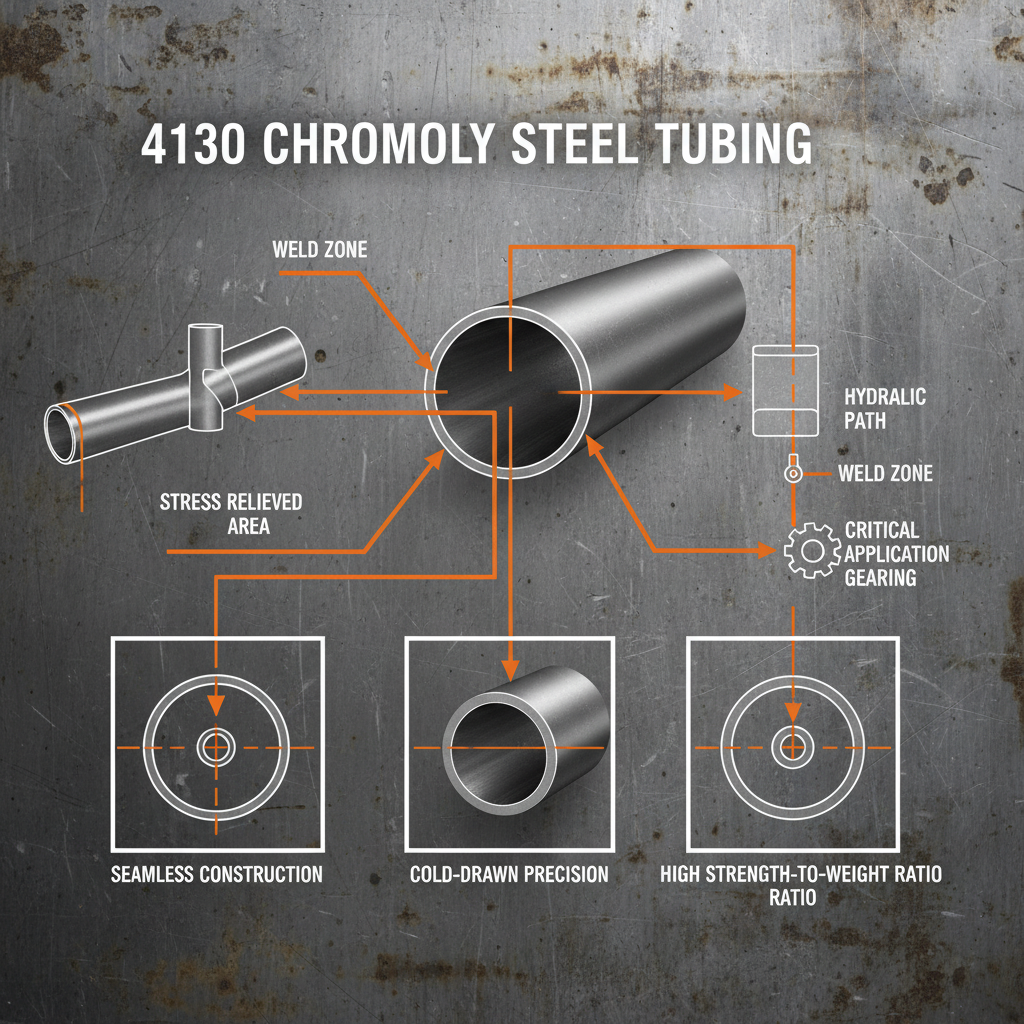
Ultimate Guide to 4130 Tubing Strength Performance and Applications
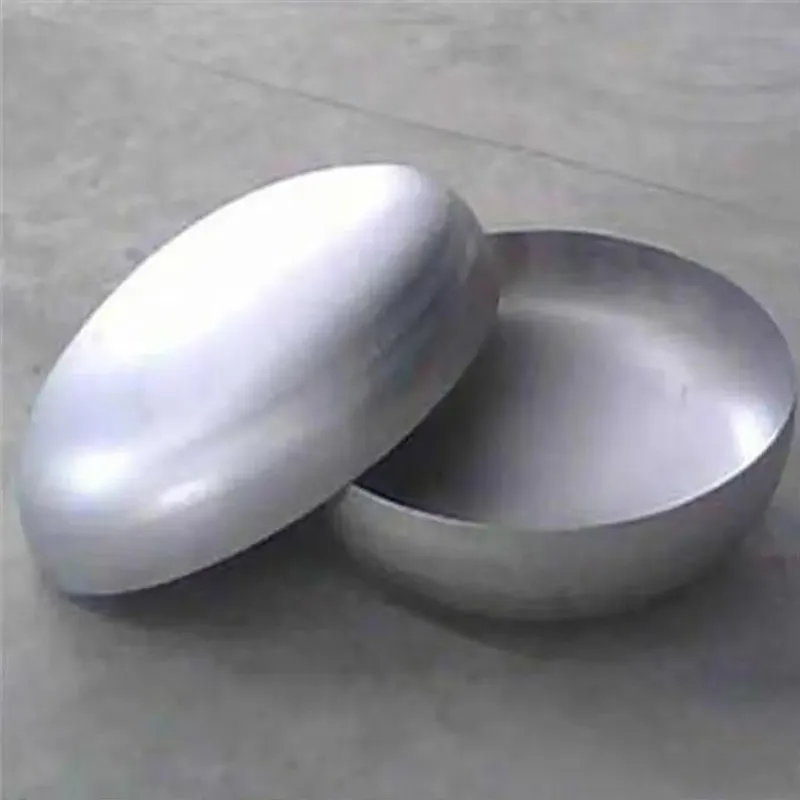
Pipe Cap-Cangzhou Lion Technology Co., Ltd.|Enhancing System Efficiency&Durability
Pipe Cap-Cangzhou Lion Technology Co., Ltd.|Enhancing System Efficiency&Durability
Pipe Cap-Cangzhou Lion Technology Co., Ltd.|Enhancing System Efficiency&Durability
Pipe Cap-Cangzhou Lion Technology Co., Ltd.|Enhancing System Efficiency&Durability
Pipe Cap-Cangzhou Lion Technology Co., Ltd.|Enhancing System Efficiency&Durability