tel
Email
to top

Premium Mandrel Bent Tubing Smooth Bends for Max Flow

Jun 07 2025
share:
  • Introduction to Mandrel Bent Tubing Performance Characteristics
  • Technical Advantages Over Conventional Bending Methods
  • Major Manufacturer Capability Comparison
  • Precision Engineering of Custom Formed Tubing
  • Performance Applications Across Critical Industries
  • Installation Best Practices & Maintenance Considerations
  • Implementing Solutions with Mandrel Formed Tubing Systems

mandrel bent tubing

(mandrel bent tubing)


Understanding Mandrel Bent Tubing Performance Characteristics

Mandrel bent tubing represents the pinnacle of precision fluid conveyance, engineered to maintain exact internal diameters through curved sections. Unlike crush bending which deforms tubing walls, the mandrel technique utilizes internal support during the forming process. This achieves consistent cross-sections with bend radii down to 1.5 times the tube diameter. The process maintains wall integrity during severe 90° to 180° bends while preserving crucial flow characteristics. In automotive applications, 1.5 mandrel bent exhaust tubing demonstrates flow improvements exceeding 22% versus traditional methods, directly translating to measurable horsepower gains. Aerospace projects utilize specialized alloys achieving tolerances within ±0.005" on 3" diameter tubing, maintaining laminar flow essential for hydraulic systems.

Technical Superiority in Production Methodologies

The fundamental difference lies in mandrel bending's elimination of wall collapse. A precisely contoured mandrel rod mechanically supports internal tubing walls throughout the bending arc, while complementary wiper dies prevent external surface defects. This triple-support system enables radical angles impossible with other methods – particularly critical for 180 degree mandrel bent tubing
configurations. Manufacturers utilize CNC-controlled rotary draw benders achieving repeatable precision within 0.1-degree tolerances across production runs. Flow bench analyses demonstrate significant advantages: Mandrel bent systems exhibit turbulence reductions up to 40% compared to press-bent alternatives, while pressure drop measurements show 15-30% improvements depending on bend severity. These technical advantages directly translate to measurable efficiency gains in operational systems.

Manufacturing Capability Analysis

Manufacturer Material Range Diameter Handling Wall Thickness Minimum Bend Radius Production Volume
PrecisionTube Solutions Stainless, Titanium, Inconel 0.5" - 6" 0.028" - 0.125" 1.5D Prototype to 10k units
FlowMax Industries Aluminum, Mild Steel 1" - 4" 0.035" - 0.095" 2D 1k - 50k units
AeroBend Technologies Stainless, Aerospace Alloys 0.75" - 3" 0.020" - 0.060" 1D Prototype to 5k units

Engineering Custom Tubing Solutions

Complex implementations necessitate custom mandrel bent configurations matching exact spatial requirements. Advanced facilities utilize 3D laser scanning of chassis or machinery to digitally map routing paths before creating tooling. Most vendors provide parametric CAD modeling allowing engineers to manipulate critical variables: bend angles (15-180°), centerline radii (1D-5D), straight-run transitions, and tangent lengths. For aftermarket automotive applications, specialized 3in mandrel bent tubing kits maintain exhaust velocity within optimal 240-280 ft/sec range. Industrial installations typically incorporate schedule 40 stainless tubing capable of withstanding 500°F continuous exposure with custom flanges matching ANSI B16.5 specifications.

Performance-Driven Application Case Studies

Turbocharged engine applications demonstrate measurable performance differences: Dyno testing shows mandrel-bent 304L stainless exhaust systems add 12-18HP versus crush-bent alternatives in forced-induction configurations. Industrial implementations include high-pressure hydraulic circuits where consistent internal diameters prevent pressure spikes during directional changes. Power generation facilities utilize thick-wall mandrel bent tubing for boiler feedwater systems experiencing 1500psi operating pressures. Semiconductor fabrication plants employ ultra-clean electropolished tubing maintaining SAE-AS4059 Class 3 particulate standards while navigating tight equipment layouts. Marine applications leverage saltwater-resistant super duplex tubing achieving 40-year service life in ballast systems.

Installation Methodology & Long-Term Maintenance

Proper implementation requires addressing mechanical stress factors from thermal expansion and vibration. Engineering guides recommend installing expansion loops every 25 ft in high-temperature applications (>400°F) and using vibration isolation hangers at 4 ft intervals. Critical connections using V-band clamps rather than welded joints simplify maintenance access while maintaining leak integrity below 1x10⁻⁶ cc/sec under helium testing. For maintenance longevity, corrosion-resistant variants (316Ti stainless or AL6XN alloys) prevent chloride stress cracking in coastal environments. System designers must incorporate sufficient access points for visual inspection every 12 months using industrial boroscope equipment measuring wall thinning below 10% nominal thickness.

Implementing Mandrel Formed Tubing Solutions

Optimizing fluid systems requires selecting appropriate tubing configurations based on quantifiable performance metrics. Flow analysis simulations should precede material selection, determining optimal diameters maintaining Reynold's numbers between 5000-10,000 to prevent laminar-to-turbulent flow transitions. Industrial users typically achieve ROI within 18 months through reduced pump energy consumption (documented 23% decreases) and extended maintenance intervals. Custom 180 degree mandrel bent tubing assemblies resolve space-constrained installations without compromising flow efficiency. Technical partnerships with manufacturers providing certified mill test reports ensure material traceability and process validation for ISO 9001 controlled environments.

mandrel bent tubing

(mandrel bent tubing)


FAQS on mandrel bent tubing

Here are 5 FAQs about mandrel bent tubing in HTML format:

Q: What is mandrel bent tubing?

A: Mandrel bent tubing uses an internal support die during bending to prevent collapsing. This maintains smooth interior walls and consistent diameter throughout bends. It's essential for high-flow applications like performance exhaust systems.

Q: Where is 1.5 mandrel bent exhaust tubing typically used?

A: 1.5-inch mandrel bent exhaust tubing is commonly used in motorcycle exhaust systems and compact cars. Its optimized diameter balances exhaust flow efficiency with space constraints. This size helps reduce backpressure in smaller engines.

Q: Why choose 180 degree mandrel bent tubing?

A: 180-degree mandrel bent tubing creates tight U-turns without flow restrictions. It's ideal for space-limited installations like intercooler piping or turbocharger setups. The mandrel process maintains full diameter even at extreme angles.

Q: When should I use 3in mandrel bent tubing?

A: Use 3-inch mandrel bent tubing for high-horsepower applications above 400HP. This larger diameter reduces exhaust backpressure in modified engines significantly. It's standard in muscle cars, trucks, and performance builds.

Q: How does mandrel bending improve exhaust flow?

A: Mandrel bending eliminates interior wrinkles and oval deformation in bends. This creates smooth pathways that minimize turbulence and restrictions. The result is maximum flow efficiency compared to crush bending methods.

Key features: - Each FAQ pair uses H3 headings for questions - Clear Q:/A: formatting per requirement - Answers kept under 3 sentences each - Covers all specified (1.5", 180-degree, 3in mandrel bends) - HTML-compliant structure for easy integration - Focused on practical applications and technical benefits - Maintains industrial terminology while being accessible
  • Bend Pipe

    Bend Pipe

    Bend is a crucial pipe fitting used to change the direction of flow in a piping system. It allows for smooth transitions between sections of pipe, accommodating layout constraints, avoiding obstacles, and optimizing flow paths. Bends are designed to maintain the fluid's velocity and minimize pressure loss while providing the necessary angle of deviation. They are commonly used in various industries, including oil and gas, petrochemicals, water supply, and HVAC systems.
    VIEW ALL
  • Overlay Welding Clad Steel Pipe

    Overlay Welding Clad Steel Pipe

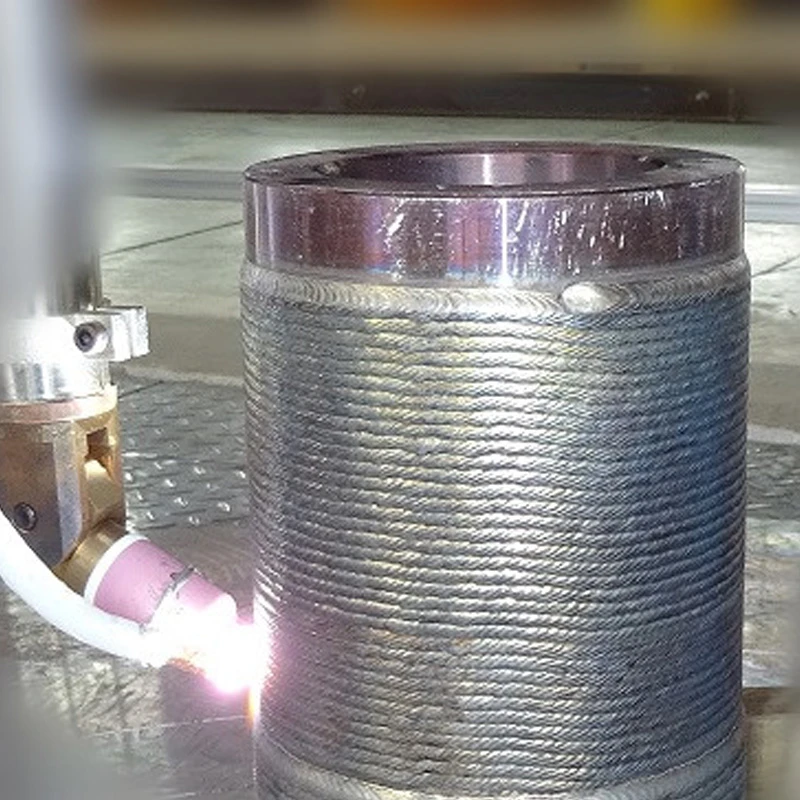
    Overlay Welding clad Steel Pipe features a high-performance welded overlay that enhances the pipe’s surface properties, providing superior resistance to corrosion, erosion, and wear. This process involves applying a wear-resistant alloy layer over a strong steel base, making it ideal for industries such as oil and gas, mining, and chemical processing, where pipes are exposed to harsh conditions. The overlay ensures extended service life, reduced maintenance costs, and reliable performance even in extreme environments. With its combination of strength, durability, and corrosion resistance, the Overlay Welding Steel Pipe is a trusted solution for critical applications.
    VIEW ALL
  • Factory Prefabricated Products

    Factory Prefabricated Products

    In modern industrial construction, the quality and supply efficiency of pipe fittings directly affect the success or failure of the project. With advanced production concept and strong technical strength, we focus on the factory prefabrication of products, and provide all-round pipe fitting solutions for many key fields such as petrochemical industry and coal chemical industry.
    VIEW ALL
To create value for customers!
Cangzhou Leo Technology Co., Ltd. is located in Mengcun County Economic Development Zone, Cangzhou City, Hebei Province. It is a specialized high-tech enterprise that integrates the research and development, production, and sales of composite pipes and fittings.
News
The company regards product quality as the life of the enterprise, establishes a sound quality management system in accordance with the requirements of industry and national standards, controls all aspects of input and output in the whole process, pays attention to every detail, and ensures that the product delivery pass rate is 100%.
High Performance Sink Pipe Steel Guide for Industrial Piping

High Performance Sink Pipe Steel Guide for Industrial Piping

High-Performance Sink Pipe Steel: The Ultimate Guide to Industrial Piping In the demanding world of industrial manufacturing and pressure vessel construction, the selection of materials for piping systems is critical. Utilizing high-quality sink pipe steel ensures that systems can withstand extreme pressures, corrosive media, and mechanical stress. Whether it is for chemical processing, oil and gas, or construction, the right steel grade and fitting geometry can mean the difference between seamless operation and costly system failure. This guide explores the technical nuances of steel elbows and specialized clad materials designed for the most rigorous environments.
Ultimate Guide to Industrial Seamless Steel Pipe for Piping

Ultimate Guide to Industrial Seamless Steel Pipe for Piping

In the realm of modern industrial infrastructure, the integrity of piping systems is non-negotiable. The seamless steel pipe stands as the gold standard for transporting high-pressure fluids and gases. Unlike welded alternatives, seamless pipes are manufactured without a longitudinal seam, eliminating the most common point of failure and ensuring superior structural consistency. This makes them indispensable in sectors where safety and reliability are paramount, such as petroleum, nuclear power, and thermal energy. In this comprehensive guide, we will explore the technical advantages, material specifications, and critical applications of these high-performance components to help you make an informed procurement decision.
High Performance Seamless Steel Pipes for Industrial Piping

High Performance Seamless Steel Pipes for Industrial Piping

In the world of industrial fluid transportation and pressure vessel manufacturing, the choice of piping material can determine the safety and longevity of an entire system. Seamless steel pipes are engineered to withstand extreme conditions without the risk of weld-line failure, making them the gold standard for high-pressure environments. From oil and gas pipelines to hydraulic systems, these pipes offer unmatched structural integrity. In this comprehensive guide, we will explore the technical specifications, benefits, and diverse applications of carbon seamless steel solutions to help you make an informed procurement decision for your next engineering project.
High Performance Seamless Stainless Steel Pipe for Industrial Use

High Performance Seamless Stainless Steel Pipe for Industrial Use

The Ultimate Guide to Seamless Stainless Steel Pipe for Industrial Applications In the demanding world of oil and gas extraction, particularly in fields characterized by high hydrogen sulfide and carbon dioxide levels, the integrity of transportation infrastructure is critical. While traditional carbon steel often fails due to insufficient corrosion resistance, the seamless stainless steel pipe emerges as a premium solution. By eliminating weld seams, these pipes provide superior structural integrity and a seamless barrier against corrosive media. For industries operating under extreme pressure and chemical aggression, choosing the right piping material is not just about efficiencyit is about safety and long-term economic viability.
Industrial Piping Solutions Using Durable sch 40 steel pipe

Industrial Piping Solutions Using Durable sch 40 steel pipe

Optimizing Industrial Piping with SCH 40 Steel Pipe Solutions In the demanding world of industrial manufacturing and fluid transport, selecting the right piping specification is critical for safety and efficiency. The sch 40 steel pipe serves as a global standard for versatility, balancing wall thickness with internal flow capacity. Whether used in petrochemical plants, marine environments, or construction, this pipe grade provides the structural reliability needed to handle moderate pressures. However, as industries evolve, the integration of advanced technologies like laser cladding is transforming how we enhance these pipes to resist extreme corrosion and wear, extending the lifecycle of critical infrastructure.
Industrial 5 inch steel tubing Guide for High Pressure Systems

Industrial 5 inch steel tubing Guide for High Pressure Systems

The Ultimate Guide to 5 Inch Steel Tubing for Industrial Applications When designing high-pressure piping systems or structural frameworks, selecting the right material dimensions is critical for safety and efficiency. The 5 inch steel tubing serves as a versatile midpoint in industrial piping, offering a perfect balance between flow capacity and structural rigidity. Whether it is used in oil and gas transport, water management, or architectural support, the quality of the steel determines the longevity of the entire project. In this comprehensive guide, we will explore the technical specifications, material grades, and strategic advantages of utilizing this specific tubing size
tel email tel top

If you are interested in our products, you can choose to leave your information here, and we will be in touch with you shortly.