tel
Email
to top

High-Performance Composite Pipe Solutions | Leading Manufacturer

Oct 10 2025
share:

Understanding the Modern Composite Pipe Landscape

The demand for advanced pipeline solutions in challenging industrial environments has propelled the composite pipe to the forefront of material science and engineering. These innovative piping systems offer a superior combination of strength, durability, and corrosion resistance, addressing the limitations inherent in traditional single-material pipes. As a leading composite pipe manufacturer, our focus is on delivering robust solutions that redefine performance benchmarks across diverse sectors.

Global industrial expansion, particularly in energy, chemical processing, and infrastructure, continues to drive innovation in pipeline technology. The increasing complexity of extracted resources and the more aggressive nature of transported media necessitate materials capable of withstanding extreme pressures, temperatures, and corrosive elements. This environment has fostered rapid advancements in composite material science, leading to systems that are not only more resilient but also offer significant life-cycle cost advantages. The market for high-performance piping solutions, including those offered by specialized composite pipe manufacturers, is projected to grow substantially, driven by global infrastructure projects and stricter environmental and safety regulations.

The Advanced Manufacturing Process of Composite Pipes

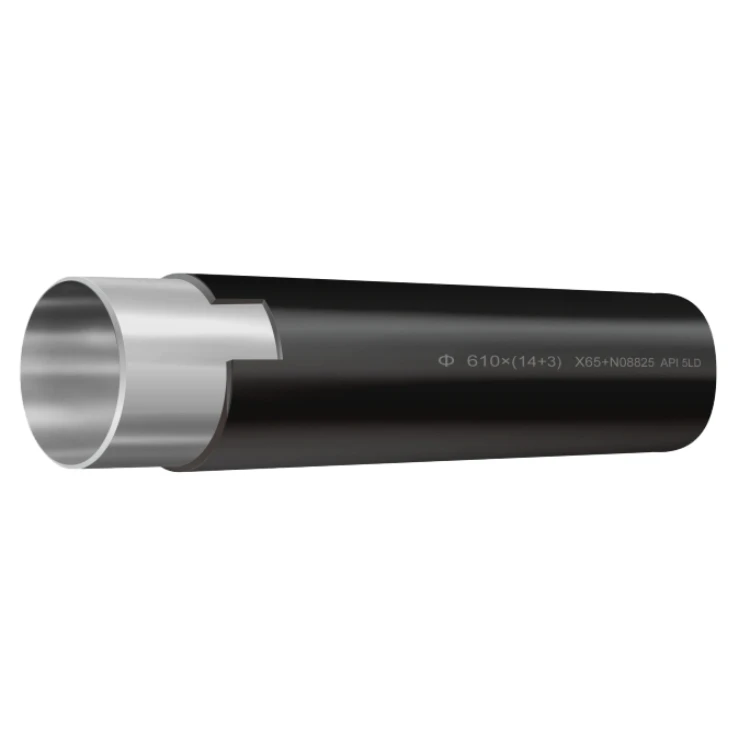
Manufacturing a high-performance composite pipe requires a meticulously controlled process to ensure optimal material integration and structural integrity. Our Laser Clad Pipe, for instance, represents a pinnacle of this technology, combining a robust steel substrate with a corrosion-resistant alloy cladding. This fusion results in a product that inherits the mechanical strength of steel while gaining the superior corrosion and wear resistance of advanced alloys.

Detailed Process Flow: Laser Cladding for Enhanced Composite Pipes

  1. Material Selection & Preparation:

    The foundation is a high-grade steel pipe, typically API 5L compliant (e.g., Gr. B, X52, X65), selected for its mechanical strength and pressure containment capabilities. The interior surface of the steel pipe undergoes thorough cleaning (e.g., grit blasting, degreasing) to ensure optimal adhesion for the cladding material. Simultaneously, specialized metallic powders (e.g., Inconel 625, Hastelloy C-276, Stainless Steel 316L) are prepared, carefully chosen for their specific corrosion and wear resistance properties.

  2. Laser Cladding Application:

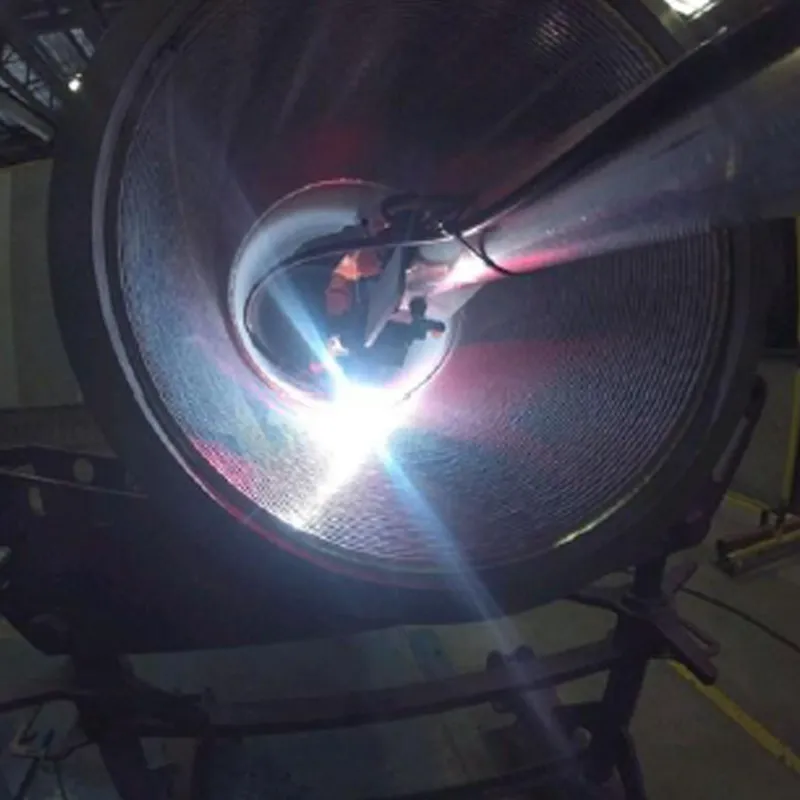
    Utilizing advanced laser cladding technology, the metallic powder is fed into a precisely focused laser beam. The laser melts both the surface of the steel substrate and the fed powder, creating a molten pool. As the laser moves, this pool solidifies, forming a dense, metallurgical bond between the cladding layer and the steel pipe. This process is highly controlled, ensuring minimal dilution (typically <5%) with the substrate, preserving the integrity of the cladding material's properties. Robotic systems ensure uniform application and precise thickness control.

  3. Post-Cladding Heat Treatment (Optional but Recommended):

    Depending on the substrate and cladding material combination, a post-cladding heat treatment may be performed. This optimizes the microstructure, relieves residual stresses, and further enhances the mechanical properties and corrosion resistance of the composite structure. Careful temperature control prevents adverse metallurgical changes.

  4. Machining and Finishing:

    After cladding, the internal surface of the pipe is precision machined (CNC machining) to achieve the specified internal diameter, surface roughness, and concentricity. This step ensures optimal flow characteristics and prepares the pipe for subsequent joining and connection processes.

  5. Quality Control & Testing:

    Rigorous testing is fundamental to ensure the integrity and performance of the composite pipe. This includes:

    • Non-Destructive Testing (NDT): Ultrasonic testing (UT) for bonding integrity, dye penetrant inspection (DPI) or magnetic particle testing (MPT) for surface defects.
    • Hydrostatic Testing: To verify pressure containment capabilities according to standards like API 5L or ASME B31.3.
    • Metallurgical Analysis: Microstructure examination, hardness testing, chemical composition verification of the cladding layer.
    • Corrosion Resistance Testing: Salt spray tests, potentiodynamic polarization tests, or H2S/CO2 corrosion tests (e.g., NACE MR0175 compliance).
    • All testing is performed in accordance with international standards such as ISO 9001, API, and ASME, ensuring consistent quality and reliability.

The typical service life of such a composite pipe can exceed 30 years in aggressive environments, significantly outperforming conventional carbon steel by offering superior corrosion and erosion resistance, translating to substantial energy saving and reduced maintenance costs over its lifespan.

Technical Specifications and Performance Parameters

The robust design and advanced manufacturing of our Laser Clad Pipe systems ensure optimal performance under extreme operational conditions. Key technical specifications include not only the physical dimensions but also critical material properties and performance metrics essential for B2B decision-makers and engineers. Our pipes meet or exceed industry standards, ensuring reliable operation in demanding applications.
Representative Product Specification Table: Laser Clad Pipe

Parameter Specification Range Typical Values
Substrate Material API 5L Gr. B to X80; ASTM A106/A333 API 5L X52/X65
Cladding Material Inconel 625/825, Hastelloy C-276, SS316L/Duplex SS Inconel 625 (UNS N06625)
Cladding Thickness 0.5 mm - 4.0 mm (0.02" - 0.16") 1.5 mm - 3.0 mm
Pipe Outer Diameter (OD) DN50 - DN1200 (2" - 48") DN200 (8")
Operating Temperature Range -46°C to +450°C (-50°F to +842°F) -20°C to +350°C
Operating Pressure Up to 25 MPa (3625 psi) 15 MPa (2175 psi)
Corrosion Resistance NACE MR0175/ISO 15156 compliant Excellent in H2S/CO2/Chloride environments
Bonding Strength >250 MPa (ASTM A263/A264/A265 equivalent) >300 MPa
High-Performance Composite Pipe Solutions | Leading Manufacturer

Strategic Application Scenarios & Technical Advantages

The unique properties of composite pipe systems make them indispensable across a spectrum of demanding industries. Their ability to deliver superior performance in aggressive environments translates into significant operational advantages.

Target Industries:

  • Petrochemical and Oil & Gas: Transport of sour gas, corrosive crude oil, and chemical reagents where H2S, CO2, and chlorides are prevalent. Critical for offshore platforms, subsea pipelines, and refinery applications.
  • Metallurgy and Mining: Handling abrasive slurries, corrosive reagents, and high-temperature process fluids in ore processing and metal refining.
  • Water Supply & Drainage (Industrial): Transport of aggressive industrial wastewater, seawater desalination systems, and high-purity water systems requiring non-leaching surfaces.
  • Chemical Processing: Conduits for acids, alkalis, and other highly reactive chemicals where material integrity is paramount for safety and efficiency.
  • Power Generation: Geothermal power plants, steam lines, and cooling water systems facing thermal and chemical stresses.

Demonstrable Advantages:

  • Superior Corrosion Resistance: The clad layer provides an impenetrable barrier against highly corrosive media, extending pipe life significantly compared to conventional materials. This translates to vastly reduced downtime and maintenance costs.
  • Enhanced Erosion Resistance: In applications involving abrasive slurries or high-velocity fluids, the hard-wearing cladding materials maintain structural integrity, ensuring consistent flow and preventing premature failure.
  • High Mechanical Strength: Leveraging the strength of the steel substrate, these pipes can withstand high internal pressures and external loads, making them suitable for critical high-pressure, high-temperature (HPHT) applications.
  • Cost-Effectiveness & Energy Saving: While initial investment might be higher than standard steel, the extended service life, reduced maintenance, and prevention of costly failures result in a significantly lower total cost of ownership (TCO). Furthermore, smooth internal surfaces reduce friction, potentially leading to energy savings in pumping operations.
  • Environmental Benefits: Longer service life reduces the need for frequent replacements, minimizing material consumption and waste. Enhanced integrity prevents leaks, safeguarding the environment from hazardous material spills.
  • Broad Material Compatibility: The ability to select specific cladding alloys allows for customization to virtually any aggressive chemical environment, ensuring optimal material compatibility and performance.

Vendor Comparison: Why Choose a Specialized Composite Pipe Manufacturer

When selecting a supplier for critical pipeline infrastructure, distinguishing between a general steel pipe manufacturer and a specialized composite pipe manufacturer is crucial. While many offer standard steel products, the expertise required for manufacturing advanced composite pipes, especially those involving laser cladding, demands a different level of specialization, technology, and quality assurance.

Comparative Analysis: Standard Steel vs. Laser Clad Composite Pipes

Feature Standard Carbon Steel Pipe Laser Clad Composite Pipe
Primary Material Carbon Steel (e.g., API 5L Gr. B) Steel Substrate + Corrosion Resistant Alloy Cladding
Corrosion Resistance Limited, susceptible to H2S/CO2/chloride corrosion. Requires inhibitors or coatings. Excellent. Cladding provides active barrier against aggressive media. NACE MR0175 compliant.
Erosion Resistance Moderate, wears down with abrasive flows. High, due to hard-wearing cladding materials.
Mechanical Strength Good, dependent on steel grade. Superior combined strength. Steel provides load-bearing, cladding provides surface protection.
Service Life Typically 5-15 years in corrosive environments. Exceeds 30 years in severe corrosive conditions, significantly extending asset life.
Total Cost of Ownership (TCO) Lower initial cost, but high maintenance/replacement costs. Higher initial cost, but significantly lower maintenance, replacement, and operational downtime costs. Lower TCO.
Manufacturing Complexity Standardized processes (welding, seamless extrusion). Highly specialized processes (laser cladding, metallurgical bonding, precision machining).

Our advantage as a specialized composite pipe manufacturer lies in our deep understanding of metallurgical science, advanced laser technology, and stringent quality control. This expertise ensures the production of pipes with verifiable performance characteristics, backed by certifications like ISO 9001 and adherence to API and ASME standards.

Customized Solutions and Application Case Studies

Recognizing that no two industrial challenges are identical, we offer highly customized composite pipe solutions tailored to the specific requirements of each project. Our engineering team collaborates closely with clients to define optimal material combinations, dimensions, and testing protocols.

Customization Capabilities:

  • Material Selection: Tailoring substrate and cladding alloy based on process fluid composition, temperature, and pressure.
  • Dimensional Flexibility: Custom pipe diameters, lengths, and wall thicknesses to match specific design parameters.
  • End Preparations: Various end connections including weld-ends, flanged ends, or specialized connectors.
  • Specialized Testing: Beyond standard procedures, we can implement specific client-requested tests, such as hydrogen-induced cracking (HIC) tests or sulfide stress cracking (SSC) tests.

Real-World Application Case Studies:

Case Study 1: Offshore Sour Gas Pipeline

A major offshore oil and gas operator faced severe internal corrosion in their conventional carbon steel flowlines transporting sour gas (high H2S/CO2 content). Frequent failures led to production deferrals and high maintenance costs. We provided Laser Clad Pipes with an API 5L X65 substrate and 2.5mm Inconel 625 cladding. After 7 years of operation, these pipes showed no measurable corrosion or degradation, significantly reducing intervention costs and ensuring uninterrupted production. This success highlights the long-term reliability and cost-effectiveness of our composite solutions in extreme environments.

Case Study 2: Geothermal Brine Transport System

A geothermal power plant required piping for highly corrosive, hot brine, rich in chlorides and silica. Traditional stainless steel pipes exhibited pitting corrosion and stress corrosion cracking. Our customized solution involved an ASTM A335 P22 substrate with a 2mm Hastelloy C-276 cladding. The superior resistance of Hastelloy to localized corrosion and stress corrosion cracking proved essential. Post-installation, the system has operated efficiently for over 10 years, dramatically improving the plant's operational efficiency and reducing environmental risks.

Trust and Support: FAQ, Lead Time, Warranty, and Customer Service

Building long-term partnerships is at the core of our business philosophy. We ensure transparency, reliability, and comprehensive support throughout the entire project lifecycle, from initial inquiry to post-installation service.

Frequently Asked Questions (FAQ):

Q: What is the primary advantage of a laser clad composite pipe over a solid alloy pipe?

A: Laser clad pipes offer the corrosion resistance of expensive alloys (like Inconel) on the internal surface where it's needed, combined with the structural strength and lower cost of a carbon steel substrate. This provides a highly cost-effective solution compared to a full-wall solid alloy pipe, especially for larger diameters and higher pressures.

Q: Are your composite pipes suitable for welding?

A: Yes, our laser clad pipes can be welded using specialized procedures that ensure the integrity of both the substrate and cladding layers. We provide detailed welding procedures and technical support to ensure successful field installation. Proper pre-heating, filler material selection, and post-weld heat treatment (if required) are critical.

Q: How do you ensure the quality of the cladding bond?

A: We employ rigorous Non-Destructive Testing (NDT) methods, including advanced ultrasonic testing (UT) and eddy current inspection, to verify the metallurgical bond integrity between the cladding and the substrate. Destructive tests like shear strength and bend tests are also performed on test coupons.

Lead Time and Fulfillment:

Lead times for our customized composite pipe solutions typically range from 8 to 20 weeks, depending on project scope, material availability, and production queue. We maintain robust supply chain management and transparent communication to keep clients informed at every stage, ensuring on-time delivery for critical projects. Expedited options may be available for urgent requirements.

Warranty Commitments:

We stand by the quality and performance of our products with a comprehensive warranty against manufacturing defects and material failures under normal operating conditions. Standard warranty periods typically range from 1 to 5 years, with extensions possible based on specific project agreements and operational parameters. Our commitment extends to ensuring client satisfaction and product longevity.

Dedicated Customer Support:

Our technical support team comprises experienced engineers and metallurgists available for pre-sales consultation, project engineering, installation guidance, and post-sales assistance. We offer on-site support, training, and troubleshooting services to ensure seamless integration and optimal performance of our piping systems. Your success is our priority.
Authoritative References

  1. NACE International. "MR0175/ISO 15156 Petroleum and Natural Gas Industries — Materials for Use in H2S-Containing Environments in Oil and Gas Production."
  2. American Petroleum Institute (API). "API Specification 5L: Specification for Line Pipe."
  3. American Society of Mechanical Engineers (ASME). "ASME B31.3 Process Piping."
  4. International Organization for Standardization (ISO). "ISO 9001: Quality management systems — Requirements."
  5. ASM International. "ASM Handbook, Volume 13A: Corrosion: Fundamentals, Testing, and Protection."
  • Bend Pipe

    Bend Pipe

    Bend is a crucial pipe fitting used to change the direction of flow in a piping system. It allows for smooth transitions between sections of pipe, accommodating layout constraints, avoiding obstacles, and optimizing flow paths. Bends are designed to maintain the fluid's velocity and minimize pressure loss while providing the necessary angle of deviation. They are commonly used in various industries, including oil and gas, petrochemicals, water supply, and HVAC systems.
    VIEW ALL
  • Carbon Semless Steel Pipes

    Carbon Semless Steel Pipes

    Carbon Seamless Steel Pipes are made from high-quality carbon steel and manufactured without welded seams, offering exceptional strength, durability, and resistance to pressure. These pipes are ideal for a wide range of applications, including oil and gas pipelines, construction, automotive, and fluid transportation systems. The seamless design ensures uniformity, higher structural integrity, and improved performance under high pressure and temperature conditions.
    VIEW ALL
  • Pipe Cap

    Pipe Cap

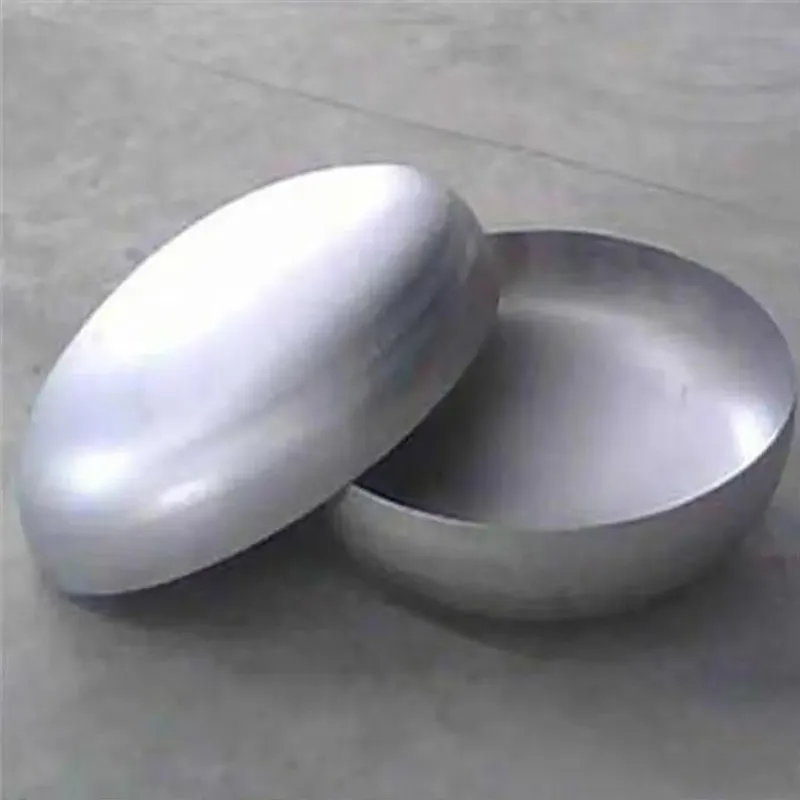
    Pipe caps come in different shapes, including round, square, and oval, and can be designed for both threaded and welded connections. They ensure the integrity of piping systems during transportation, storage, and installation by protecting the pipe ends from dirt, debris, and environmental factors. Durable and easy to install, pipe caps are critical for maintaining system efficiency and safety.
    VIEW ALL
To create value for customers!
Cangzhou Leo Technology Co., Ltd. is located in Mengcun County Economic Development Zone, Cangzhou City, Hebei Province. It is a specialized high-tech enterprise that integrates the research and development, production, and sales of composite pipes and fittings.
News
The company regards product quality as the life of the enterprise, establishes a sound quality management system in accordance with the requirements of industry and national standards, controls all aspects of input and output in the whole process, pays attention to every detail, and ensures that the product delivery pass rate is 100%.
Comprehensive Guide to Steel Pipes and Fittings | Benefits & Global Applications

Comprehensive Guide to Steel Pipes and Fittings | Benefits & Global Applications

Steel Pipes and Fittings: Backbone of Global Infrastructure Steel pipes and fittings might sound lik
Understanding Welded Steel Pipe: Applications, Benefits, and Innovations

Understanding Welded Steel Pipe: Applications, Benefits, and Innovations

The Quiet Power of Welded Steel Pipe in Today's World If you’re here, you’re probably wo
The Essential Guide to Tube and Steel: Applications, Benefits, and Future Trends

The Essential Guide to Tube and Steel: Applications, Benefits, and Future Trends

Understanding Tube and Steel: Why It Matters in a Complex World If you haven’t given much thou
Thin Wall Steel Pipe – Lightweight Strength for Global Infrastructure Solutions

Thin Wall Steel Pipe – Lightweight Strength for Global Infrastructure Solutions

Understanding Thin Wall Steel Pipe: Why It Matters Globally The term “thin wall steel pipe&rdq
Thick Wall Steel Tubing: Durable Solutions for Global Pipelines and Infrastructure

Thick Wall Steel Tubing: Durable Solutions for Global Pipelines and Infrastructure

The Growing Importance of Thick Wall Steel Tubing: A Practical Overview Sometimes when you hear &ldq
Thick Wall Steel Pipe - Durable Industrial Piping for High-Pressure Applications

Thick Wall Steel Pipe - Durable Industrial Piping for High-Pressure Applications

Understanding Thick Wall Steel Pipe: What It Is and Why It Matters Globally If you’ve ever enc
tel email tel top

If you are interested in our products, you can choose to leave your information here, and we will be in touch with you shortly.