Advancing Industrial Infrastructure with Prefabricated Pipework Solutions
In the rapidly evolving landscape of industrial infrastructure, the demand for efficient, reliable, and high-performance piping systems is paramount. Traditional on-site pipe fabrication often presents challenges related to time, cost, quality control, and safety. This has spurred a significant industry shift towards advanced off-site manufacturing techniques, with prefabricated pipework emerging as a transformative solution. This approach leverages controlled factory environments to produce pipe spool pieces and assemblies that are ready for installation, dramatically streamlining project timelines and enhancing overall system integrity. Key industry trends indicate a growing adoption of these solutions across various sectors, driven by stricter environmental regulations, increasing project complexities, and the need for optimized operational expenditures.
The advantages of this methodology extend beyond mere convenience, encompassing superior material quality, precision engineering, and significantly reduced project risks. This article delves into the intricate process, technical advantages, diverse applications, and tangible benefits of opting for custom-engineered solutions in industrial piping.
The Advanced Manufacturing Process of Prefabricated Pipework
The production of prefabricated pipework is a meticulous process, executed in a controlled factory environment to ensure the highest standards of quality and precision. This structured approach minimizes variables inherent in field fabrication and significantly enhances the final product's reliability and longevity. Below are the key stages:
1. Engineering and Design
- Conceptualization & FEED: Initial project requirements are translated into detailed specifications.
- 3D Modeling & Stress Analysis: Advanced software (e.g., AutoCAD Plant 3D, Intergraph SmartPlant) is used to create precise 3D models. Critical stress points, thermal expansion, and vibration are analyzed to ensure structural integrity and operational safety under various conditions. This stage is crucial for designing a robust customized steel pipe solution.
- Material Selection: Based on fluid properties, operating temperature, pressure, and corrosion resistance requirements, specific materials are chosen. Common materials include carbon steel (ASTM A106, API 5L), stainless steel (304/304L, 316/316L, Duplex 2205), alloy steel (ASTM A335 P11/P22/P91), and sometimes exotic alloys like Hastelloy or Inconel for extreme applications.
- Spool Generation: The overall piping system is broken down into manageable spools, each with detailed fabrication drawings.
2. Material Preparation and Cutting
- Receiving and Inspection: Raw materials undergo thorough inspection for defects, dimensional accuracy, and material certification traceability (e.g., mill test reports).
- Cutting: Pipes are cut to precise lengths using automated plasma, laser, or saw cutting machines, ensuring accuracy to within +/- 1mm. This enhances the precision of the prefab pipe.
- Beveling: Pipe ends are beveled for optimal weld preparation, typically to ASME B16.25 standards, using CNC machining for consistency.
3. Fabrication and Assembly
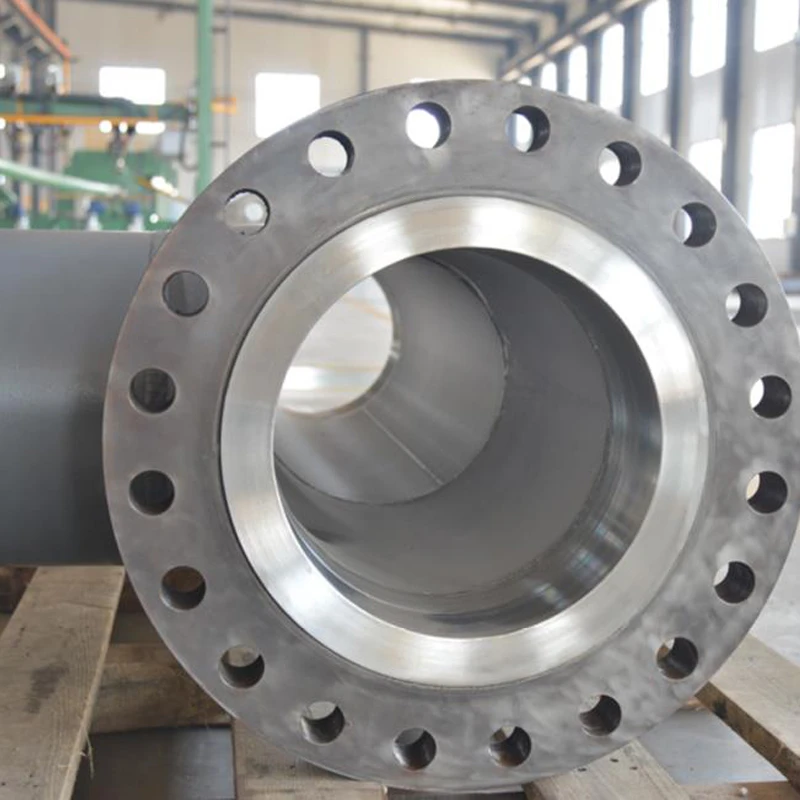
- Fitting Attachment: Flanges, elbows, tees, and other fittings are tacked into place according to spool drawings.
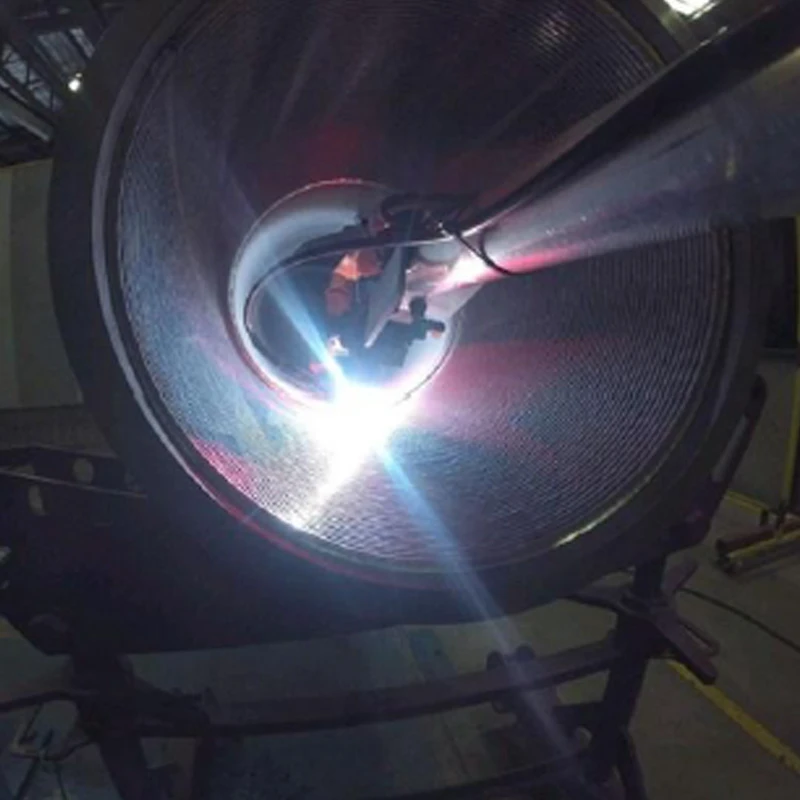
- Welding: Highly skilled and certified welders perform welding using various techniques such as GTAW (TIG), GMAW (MIG), SAW (Submerged Arc Welding), and SMAW (Stick). Robotic welding is increasingly used for repetitive tasks, improving speed and consistency. Weld procedures are qualified to ASME Section IX or EN ISO 15614.
- Forming Processes: For certain components, processes like cold bending, hot bending, or forging may be employed to achieve specific geometries and material properties.
- Heat Treatment: Post-weld heat treatment (PWHT) is applied when necessary, especially for alloy steels, to relieve residual stresses and restore material properties, as per ASME B31.3.
4. Quality Control and Testing
- Visual Inspection: Ongoing visual inspection of welds and dimensions throughout fabrication.
- Non-Destructive Testing (NDT): Includes Radiographic Testing (RT), Ultrasonic Testing (UT), Magnetic Particle Testing (MPT), Liquid Penetrant Testing (LPT) as per ASME B31.1/B31.3, EN 10204, or customer specifications. This ensures weld integrity and material soundness for the prefab pipework.
- Hydrostatic Testing: Each spool is pressure tested with water to a specified pressure (typically 1.5 times the design pressure) to confirm leak-tightness and structural integrity, adhering to standards like ASME B31.3.
- Dimensional Inspection: Final verification against engineering drawings using laser scanning or traditional measurement tools.
5. Surface Treatment and Finishing
- Cleaning: Removal of scale, slag, and contaminants.
- Blasting: Abrasive blasting to achieve desired surface profile for coating adhesion.
- Coating/Painting: Application of primers, intermediate coats, and topcoats for corrosion protection, specific to the operating environment (e.g., epoxy coatings, polyurethane coatings). For particularly corrosive environments, specialized linings (e.g., rubber, glass flake) may be applied.
6. Packaging and Logistics
- Labeling and Tagging: Each spool is clearly marked with unique identification numbers for easy tracking and installation.
- Protective Packaging: Ends are capped, and spools are securely bundled or crated to prevent damage during transit.
- Shipping: Coordinated logistics ensure on-time delivery to the project site.
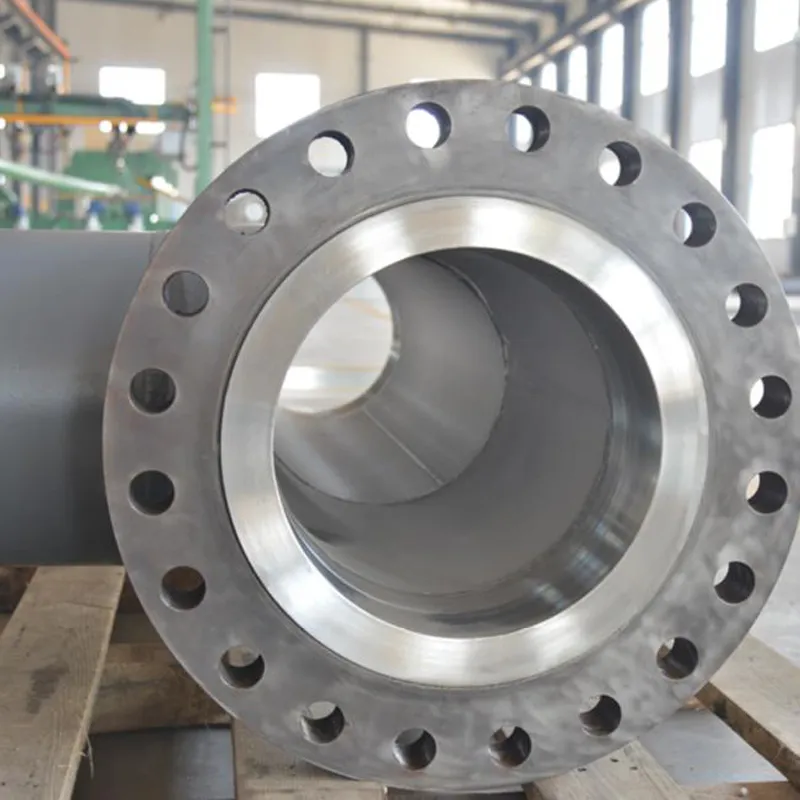
Technical Specifications and Performance Parameters
Understanding the precise technical parameters and performance characteristics of prefabricated pipework is crucial for B2B decision-makers. These systems are engineered to rigorous standards, offering superior performance compared to traditional field fabrication.
Typical Product Specification Ranges for Prefabricated Pipework
| Parameter |
Typical Range / Specification |
Relevant Standard / Compliance |
| Pipe Diameter (DN/NPS) |
DN15 (½") to DN1500 (60") |
ASME B36.10M / B36.19M |
| Wall Thickness (Schedule) |
SCH 10 to SCH XXS (e.g., SCH 40, SCH 80, SCH 160) |
ASME B36.10M / B36.19M |
| Material Grades |
Carbon Steel (ASTM A106 Gr.B, API 5L Gr.B/X42-X80), Stainless Steel (ASTM A312 TP304/316/Duplex), Alloy Steel (ASTM A335 P11/P22/P91) |
ASTM, API, EN, JIS |
| Design Pressure |
Up to 2500 PSI (172 Bar) or higher for specialized applications |
ASME B31.1 / B31.3 |
| Design Temperature |
-196°C to +800°C, depending on material |
ASME B31.1 / B31.3 |
| Welding Standards |
ASME Section IX, AWS D1.1, EN ISO 15614 |
Industry best practices |
| Testing & Inspection |
Visual, RT, UT, MPT, LPT, Hydrostatic, PMI, PWHT |
ASME B31.3, ASTM E165, ISO 17637, EN 10204 3.1 |
| Dimensional Tolerances |
+/- 1.5mm to +/- 3.0mm depending on spool length and complexity |
ASME B31.3 Appendix II, client specifications |
| Surface Finish |
SA 2.5 (Near White Metal Blast), various paint/coating systems |
ISO 8501-1, SSPC, NACE |
| Estimated Service Life |
20-50+ years, depending on material, fluid, operating conditions, and maintenance. Many systems are designed for the full lifecycle of the plant. |
Predictive modeling, industry experience |
Our commitment to precision engineering ensures that every aspect, from material composition to weld integrity, meets or exceeds the most stringent industry benchmarks. This meticulous attention to detail is what defines a truly reliable prefab pipe solution.
Application Scenarios and Industry Impact
The versatility and inherent advantages of prefabricated pipework make it indispensable across a multitude of industrial sectors. Its ability to handle diverse media, pressures, and temperatures, coupled with enhanced durability, drives its widespread adoption.
Target Industries:
- Petrochemical and Oil & Gas: Critical for refineries, offshore platforms, LNG terminals, and chemical processing plants where safety, corrosion resistance (e.g., for acids, hydrocarbons), and ability to withstand extreme pressures and temperatures are paramount.
- Power Generation: Used in thermal, nuclear, and renewable energy plants for steam lines, cooling water systems, and fuel delivery, requiring materials capable of high heat and pressure.
- Water Treatment and Desalination: Essential for transporting potable water, wastewater, and brine. Requires corrosion-resistant materials (e.g., stainless steel, coated carbon steel) and leak-proof connections.
- Metallurgy and Mining: Robust piping systems are needed for slurry transport, cooling systems, and process water in harsh, abrasive environments.
- Pharmaceutical and Food & Beverage: High-purity stainless steel piping with polished internal surfaces is critical to prevent contamination and ensure sanitary conditions, often compliant with FDA or cGMP standards.
- Shipbuilding: Compact, pre-assembled modules for engine rooms and utility lines accelerate construction and reduce on-board welding.
Demonstrated Advantages in Typical Application Scenarios:
- Energy Saving: Precisely engineered bends and internal surface finishes in customized steel pipe reduce friction and pressure drop, leading to lower pumping energy requirements over the system's operational life. For instance, in a large-scale crude oil pipeline, an optimized prefab pipe design can reduce pumping energy by 5-10%, translating to significant operational cost savings over decades.
- Corrosion Resistance: For industries dealing with aggressive chemicals (e.g., sulfuric acid in chemical plants) or saltwater (e.g., offshore platforms), utilizing materials like Duplex stainless steel or expertly coated carbon steel in prefab pipe assemblies drastically extends service life, reducing maintenance downtime and replacement costs. A well-designed, corrosion-resistant system can increase MTBF (Mean Time Between Failures) by up to 300% compared to standard materials.
- Enhanced Safety: In hazardous environments like chemical processing or nuclear facilities, the controlled fabrication process minimizes human error and allows for advanced NDT, resulting in virtually defect-free welds. This significantly reduces the risk of leaks, ruptures, and associated environmental or safety incidents, which are critical for any prefab pipework deployment.
- Reduced Downtime: With up to 80% of fabrication completed off-site, project schedules are accelerated. This is particularly critical during plant turnarounds or expansions where every day of reduced downtime translates into millions in saved revenue. Installation time can be cut by 30-50%.
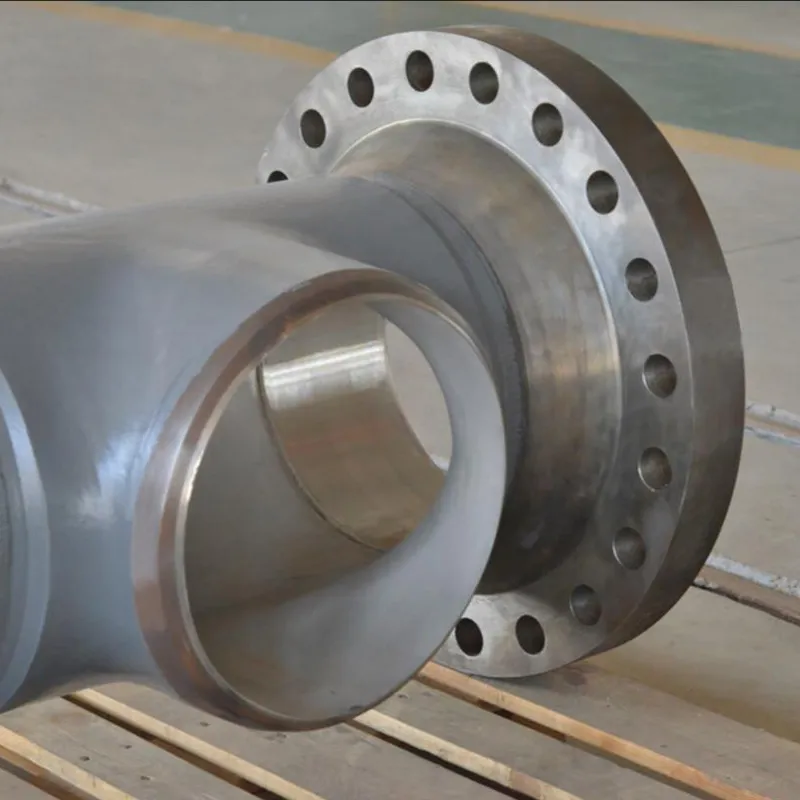
Customized Solutions and Vendor Comparison
While the general principles of prefabricated pipework remain consistent, the true value lies in the ability to deliver highly customized solutions tailored to specific project demands. Choosing the right vendor is critical, as capabilities vary significantly.
Customization Capabilities:
- Material Versatility: Ability to work with a vast array of materials from standard carbon steel to high-nickel alloys (e.g., Inconel 625 for extreme corrosive/high-temperature applications).
- Complex Geometries: Fabrication of intricate spool designs, multi-dimensional bends, and compact modules for space-constrained environments.
- Special Coatings & Linings: Application of specialized internal and external coatings (e.g., ceramic, fusion-bonded epoxy) or linings (e.g., PTFE, rubber) for enhanced protection against abrasion, corrosion, or contamination.
- Integrated Components: Pre-assembly of valves, instruments, supports, and insulation, reducing on-site work to a minimum.
- Modular Skids: Fabrication of entire pipe racks or process skids, fully assembled and tested in the factory before shipment.
Vendor Comparison: Key Differentiators
Selecting a supplier for specialized piping requires a thorough evaluation beyond mere price. Factors like technical prowess, quality assurance, and experience with complex projects are paramount.
| Feature |
Leading Prefabrication Specialist (e.g., Lion Pipeline) |
General Pipe Fabricator / On-site Fabrication |
| Fabrication Environment |
Controlled factory setting (optimal conditions) |
Outdoor / Semi-controlled site (variable conditions) |
| Quality Control |
Multi-stage inspection, advanced NDT, dedicated QA/QC teams, ISO 9001 certified. |
Limited on-site inspection, basic NDT, inconsistent quality. |
| Precision & Tolerances |
High (e.g., +/- 1-3mm), Robotic welding, CNC machining. |
Moderate to low (e.g., +/- 5-10mm), Manual processes. |
| Project Schedule Impact |
Significantly reduced on-site installation time (30-50% faster). |
Dependent on weather, labor availability, site conditions; often causes delays. |
| Cost Efficiency (Overall) |
Lower total installed cost due to reduced labor, faster project completion, less rework. |
Higher total installed cost due to inefficiencies, overtime, rework, extended schedules. |
| Safety Record |
Excellent; factory environment allows for strict safety protocols and less exposure to site hazards. |
Higher risk of accidents due to dynamic construction site conditions. |
| Certifications & Traceability |
Full material traceability, extensive certifications (ISO, ASME, API, PED). |
Potentially inconsistent documentation and limited certifications. |
Specialized manufacturers, like Lion Pipeline, invest heavily in advanced machinery, skilled personnel, and robust quality management systems. This ensures that every piece of prefab pipework not only meets but often exceeds the most demanding project specifications, offering a superior long-term value proposition.
Real-World Application Case Studies
The practical benefits of prefabricated pipework are best illustrated through real-world applications where these solutions have delivered significant value and overcome complex engineering challenges.
Case Study 1: Large-Scale LNG Terminal Expansion (Middle East)
- Challenge: An ambitious expansion of an existing LNG terminal required thousands of linear meters of high-pressure, cryogenic piping (DN600, SCH80, 304L Stainless Steel) within an extremely tight schedule and limited on-site space. The environment also presented high seismic activity risks.
- Solution: A specialist fabricator was contracted to supply over 15,000 spools of prefab pipe. Utilizing advanced 3D modeling and robotic welding, spools were fabricated, hydro-tested, insulated, and coated off-site.
- Outcome:
- Schedule Acceleration: On-site installation time was reduced by approximately 40%, saving an estimated 6 months on the overall project schedule.
- Quality & Safety: Factory-controlled welding reduced weld reject rates to below 1%, significantly enhancing system integrity and reducing safety risks associated with on-site hot work in a live plant.
- Cost Savings: Reduced on-site labor, inspection, and rework resulted in a 12% reduction in total installed cost compared to initial estimates for traditional methods.
Case Study 2: Municipal Water Treatment Plant Upgrade (North America)
- Challenge: Upgrading a vital municipal water treatment plant required replacing aging carbon steel pipelines with new corrosion-resistant ductile iron and stainless steel piping to meet updated potable water standards and extend service life. Minimizing disruption to water supply was paramount.
- Solution: Customized steel pipe sections, including large-bore (DN1000) flanged pipe and complex manifold assemblies, were prefabricated. Each section was internally lined with specialized epoxy and externally coated for enhanced longevity against aggressive treated water and underground conditions.
- Outcome:
- Operational Continuity: Phased delivery of pre-assembled sections allowed for rapid cut-in and tie-ins, reducing plant shutdown time by 60%, minimizing impact on residents.
- Durability: The specialized coatings and controlled fabrication ensure a projected service life of 50+ years, significantly reducing future maintenance.
- Compliance: All materials and coatings met NSF/ANSI standards for potable water contact, ensured by rigorous factory testing and certification.
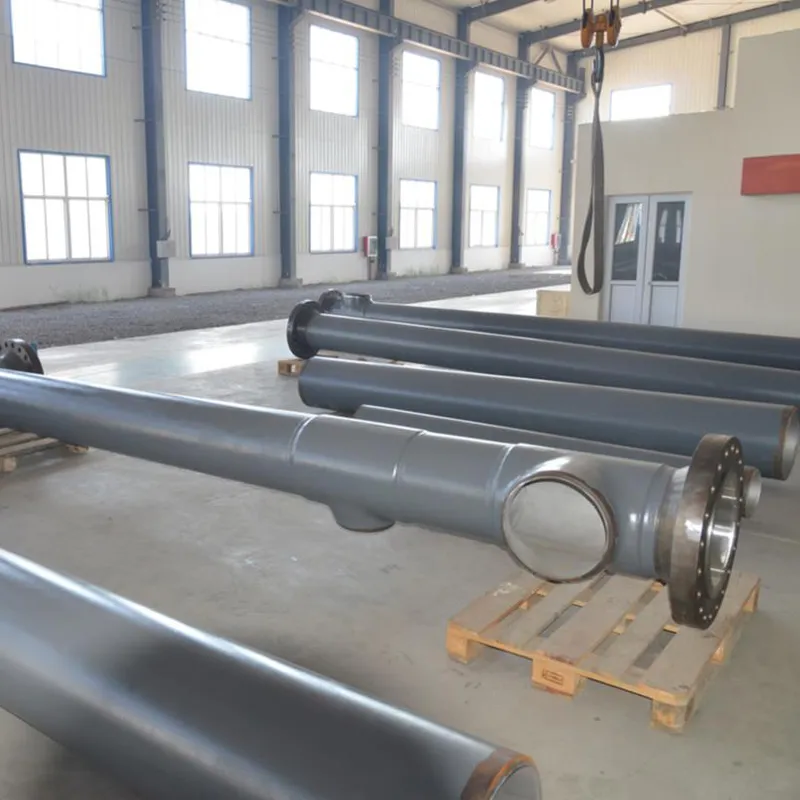
Ensuring Quality and Trust: Certifications and Guarantees
Authoritativeness and trustworthiness are foundational in B2B relationships. A reputable provider of prefabricated pipework stands by its products with robust certifications, transparent processes, and unwavering support.
Company and Product Certifications:
- ISO 9001:2015: Demonstrates a comprehensive quality management system covering design, production, installation, and servicing.
- ASME U/PP Stamps: Certification for pressure vessels (U stamp) and power piping (PP stamp), indicating adherence to the highest standards of boiler and pressure vessel code.
- API Q1: For manufacturers in the oil and natural gas industry, ensuring quality management system requirements are met.
- PED 2014/68/EU: Compliance with the European Pressure Equipment Directive, enabling sales and usage within the EU.
- Environmental & Safety Certifications: ISO 14001 (environmental management) and ISO 45001 (occupational health and safety) further underscore a commitment to responsible operations.
Lead Time and Fulfillment:
Due to advanced planning and parallel fabrication, typical lead times for complex prefabricated pipework projects range from 8-16 weeks from design approval to delivery, depending on project scope and material availability. Standard components can be delivered even faster. Our project management team provides detailed schedules and consistent updates to ensure on-time delivery.
Warranty Commitments:
We stand behind the quality of our prefab pipework with a comprehensive warranty, typically covering defects in material and workmanship for a period of 12-24 months post-installation or 18-30 months post-shipment (whichever comes first). Specific warranty terms are outlined in project contracts, providing clients with peace of mind regarding long-term performance.
Customer Support Information:
Our dedicated technical support team is available from project inception through commissioning and beyond. This includes:
- Pre-Sales Consultation: Expert advice on material selection, design optimization, and cost analysis.
- Project Management: Single point of contact for project coordination, progress reports, and logistics.
- Post-Installation Support: Assistance with troubleshooting, maintenance queries, and spare parts.
- Training: On-site or remote training for client personnel on product handling and maintenance.
We pride ourselves on responsive and knowledgeable support, ensuring optimal performance and longevity for all installed systems.
Frequently Asked Questions (FAQ) about Prefabricated Pipework
Q1: How does prefabricated pipework compare in cost to traditional on-site fabrication?
While the upfront material and factory fabrication costs for a custom solution might seem higher, the overall Total Installed Cost (TIC) for prefabricated pipework is typically 10-25% lower. This is primarily due to significant reductions in on-site labor hours, reduced equipment rental, minimized material waste, lower inspection costs, and accelerated project timelines. The superior quality also leads to lower long-term maintenance expenses.
Q2: What is the maximum size of pipe that can be prefabricated?
Fabrication capabilities vary by manufacturer, but leading specialists can routinely handle pipe diameters up to DN1500 (60 inches) and beyond. The primary limitations are typically transportation logistics for very large or complex spools, rather than manufacturing capacity. Advanced vendors utilize modular design to manage ultra-large projects by breaking them into transportable sections.
Q3: How are the dimensional tolerances of prefabricated spools ensured for perfect fit-up on site?
Dimensional accuracy is a hallmark of prefabricated pipework. This is achieved through precision engineering utilizing 3D CAD models, CNC cutting and bending machines, and rigorous factory dimensional quality control using laser trackers or coordinate measuring machines (CMMs). Spools are fabricated to tight tolerances (often +/- 1-3mm), significantly reducing the need for field adjustments and ensuring seamless fit-up.
Q4: What environmental benefits does prefab pipe offer?
Prefabrication significantly reduces environmental impact by minimizing waste generation on construction sites, optimizing material usage, and reducing energy consumption associated with on-site processes. Factory environments allow for better control over waste disposal, recycling, and reduced emissions from mobile welding equipment, contributing to a more sustainable project execution.
Q5: Can existing piping systems be upgraded with prefabricated sections?
Yes, existing systems can be seamlessly upgraded or expanded using prefabricated sections. Detailed laser scanning of the existing infrastructure allows for precise design and fabrication of tie-in spools, ensuring a perfect match with existing connections and minimizing downtime during installation. This approach is highly effective for brownfield projects and plant modernization efforts.
Conclusion
The paradigm shift towards prefabricated pipework represents a significant advancement in industrial construction and infrastructure development. By moving critical fabrication processes into controlled, high-tech factory environments, industries can achieve unparalleled levels of precision, quality, safety, and efficiency. The benefits—ranging from accelerated project schedules and reduced total installed costs to enhanced system integrity and extended service life—make a compelling case for its adoption across diverse sectors. For B2B decision-makers and engineers, investing in customized, expertly fabricated solutions is not merely a choice for convenience but a strategic imperative for long-term operational excellence and competitive advantage.
Partnering with an experienced and certified manufacturer ensures that every piping system is a robust, reliable, and cost-effective solution tailored to the most demanding industrial requirements.
References
- American Society of Mechanical Engineers (ASME). (2018). ASME Boiler and Pressure Vessel Code.
- International Organization for Standardization (ISO). (2015). ISO 9001:2015 - Quality management systems — Requirements.
- API (American Petroleum Institute). (2019). API Specification Q1 - Specification for Quality Management System Requirements for Manufacturing Organizations for the Petroleum and Natural Gas Industry.
- European Committee for Standardization (CEN). (2014). PED 2014/68/EU - Pressure Equipment Directive.
- Welding Institute (TWI). (2020). Guide to Welding Processes.