tel
Email
to top
DÉTAILS DU PRODUIT
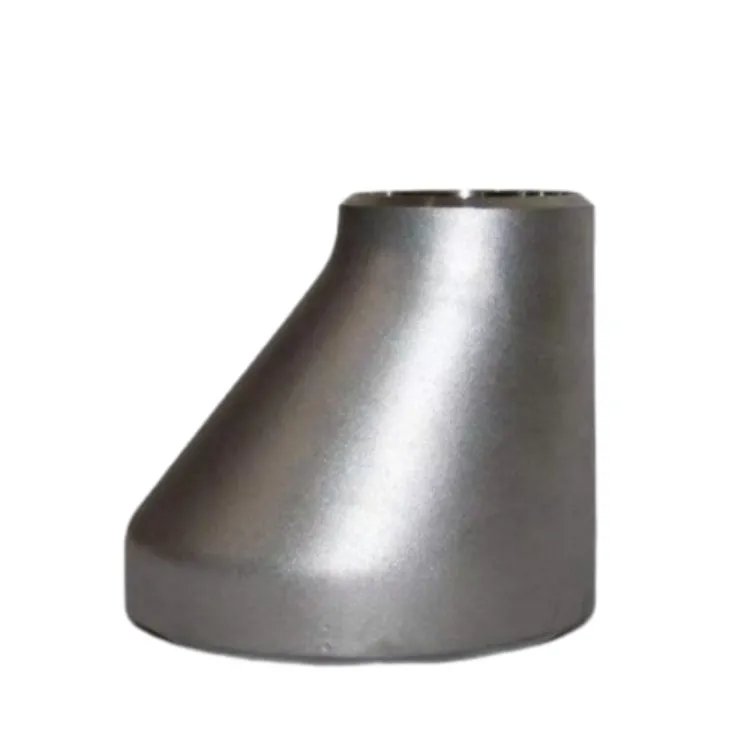
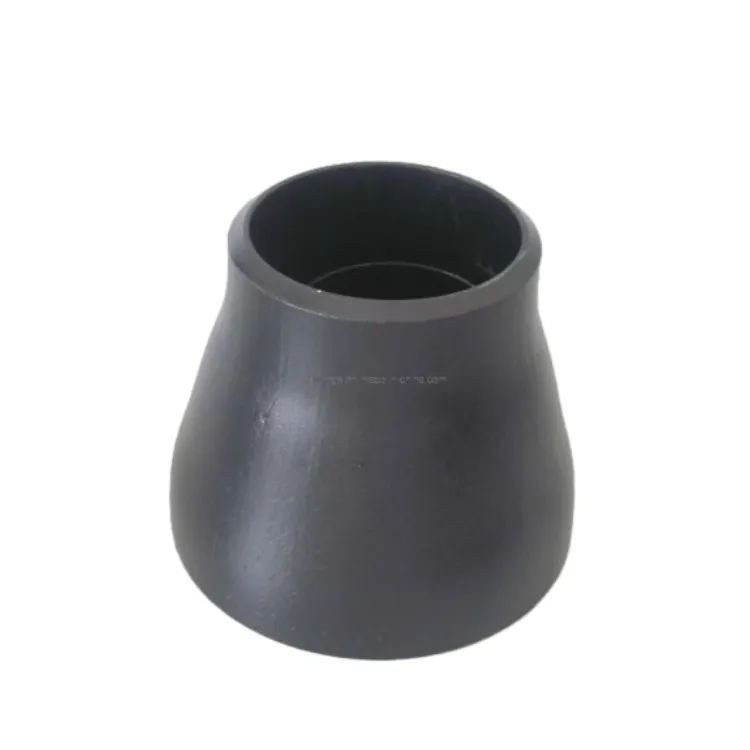
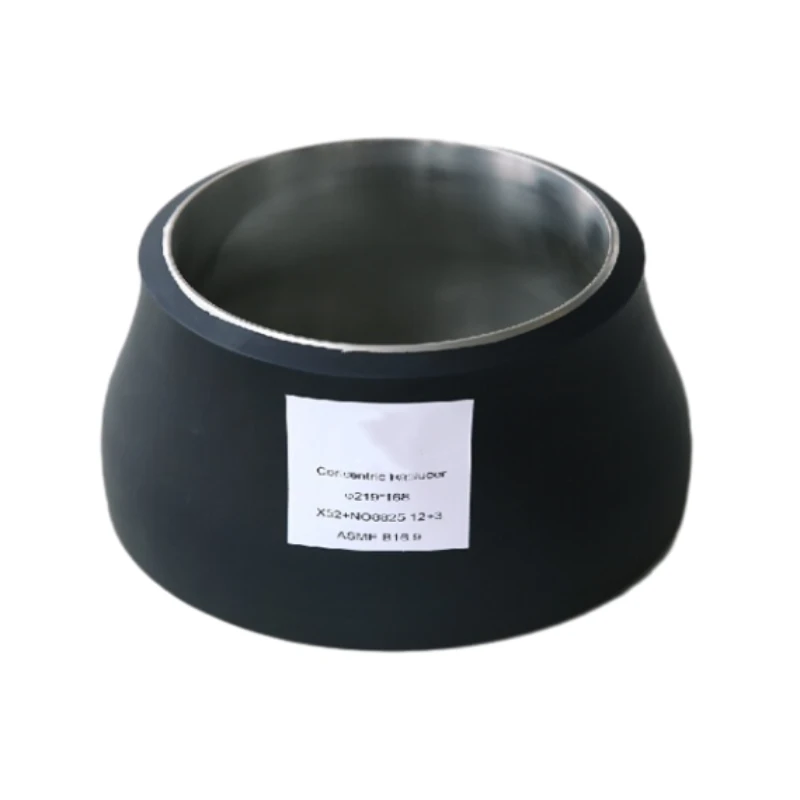
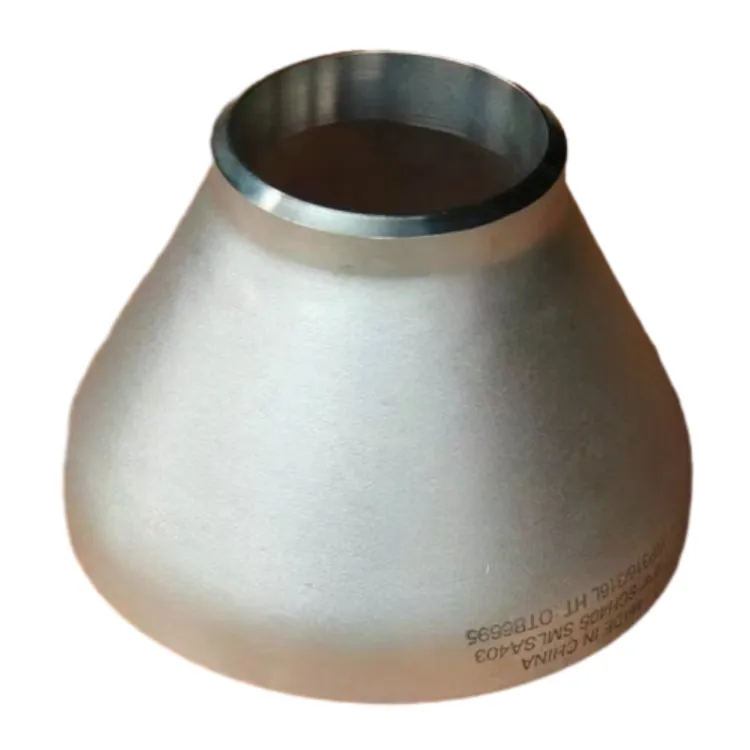
Réducteur
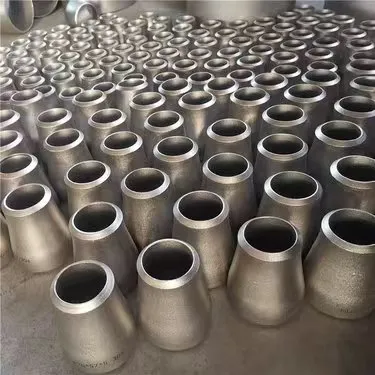
Un réducteur est un raccord de tuyauterie utilisé pour raccorder des tuyaux de différents diamètres, facilitant ainsi les transitions fluides entre les différents débits des réseaux de tuyauterie. Disponibles en modèles concentriques et excentriques, les réducteurs contribuent à maintenir un débit optimal tout en minimisant les pertes de charge et les turbulences.
partager:
Présentation du produit réducteur

Les réducteurs, également appelés tubes réducteurs, sont des raccords utilisés pour raccorder des tuyaux de différents diamètres dans des systèmes de tuyauterie. Ils sont largement utilisés dans des secteurs tels que le pétrole, la chimie et l'énergie. Leur fonction principale est d'obtenir une transition progressive du diamètre des tuyaux, assurant ainsi un écoulement fluide. Les réducteurs sont divisés en types concentriques et excentriques. Les tailles courantes vont de DN15 à DN2000, avec des pressions nominales de Sch5s à Sch60 et de PN0,6 à PN32. Les réducteurs sont fabriqués à partir de matériaux tels que l'acier au carbone, l'acier allié, l'acier inoxydable et l'acier basse température. Les méthodes de formage incluent l'emboutissage et le laminage. Les réducteurs sont principalement conformes aux normes internationales telles que l'ASME B16.9-2018 et la MSS SP-75-2019.

Caractéristiques du réducteur

1. Transition de diamètre en douceur : assure une connexion en douceur entre les tuyaux de différents diamètres, réduisant les turbulences et la résistance et diminuant les pertes d'énergie.

2. Compatibilité avec divers tuyaux : peut se connecter à des tuyaux de différents matériaux et types, tels que des tuyaux en acier et des tuyaux en acier inoxydable, répondant à divers besoins d'ingénierie et de transport moyen.

3. Résistance fiable : Fabriqué à partir de matériaux adaptés aux tuyaux, offrant une résistance et une rigidité suffisantes pour résister à la pression interne du fluide et aux forces externes, empêchant la rupture ou la déformation.

4. Bonne stabilité : une conception structurelle raisonnable assure la stabilité lors de la connexion de tuyaux de différents diamètres, maintenant la stabilité globale du système de tuyauterie.


Réduction du poids :

Diamètre nominal de la tête

Poids approximatif kg

DN

NPS

SCH10S

SCH20

MST

SCH40

XS

SCH80

20

3/4

0.05

-

0.08

0.08

0.10

0.10

25

1

0.10

-

0.17

0.17

0.20

0.20

32

1-1/4

0.13

-

0.21

0.21

0.25

0.25

40

1-1/2

0.20

-

0.29

0.29

0.35

0.35

50

2

0.28

-

0.42

0.42

0.58

0.58

65

2-1/2

0.45

-

0.80

0.80

1.03

1.03

80

3

0.55

-

1.05

1.05

1.42

1.42

90

3-1/2

0.74

-

1.36

1.36

1.89

1.89

100

4

0.84

-

1.63

1.63

2.27

2.27

125

5

1.38

-

2.77

2.77

3.93

3.93

150

6

1.85

-

3.96

3.96

5.95

5.95

200

8

2.80

-

6.31

6.31

9.26

9.26

250

10

4.60

7.85

10.7

10.7

14.5

17.5

300

12

7.00

11.2

15.8

16.3

20.9

25.1

350

14

14.0

25.6

28.8

32.1

37.1

56.5

400

16

17.5

30.5

38.5

48.8

48.8

79.0

450

18

21.5

35.2

44.5

64.3

58.5

102

500

20

36.0

62.7

62.7

98.5

80.4

165

550

22

38.0

72.6

72.6

-

93.8

181

600

24

47.5

97.1

79.1

142

101

226

650

26

-

130

99.9

-

130

-

700

28

-

142

110

-

142

-

750

30

85.0

152

119

-

152

-

800

32

-

151

125

208

151

-

850

34

-

171

132

231

171

-

900

36

-

180

140

262

180

-

950

38

-

-

148

-

194

-

1000

40

-

-

156

-

203

-

1050

42

-

-

178

-

235

-

1100

44

-

-

189

-

244

-

1150

46

-

-

199

-

257

-

1200

48

-

-

210

-

269

-

1300

52

-

-

223

-

-

-

1400

56

-

-

241

-

-

-

1500

60

-

-

258

-

-

-

Caractéristiques du réducteur

  • 01
    Smooth Diameter Transition

    Transition de diamètre en douceur

    Assure des connexions fluides entre des tuyaux de différents diamètres, réduit les turbulences et la résistance, minimise les pertes d'énergie et optimise le débit des fluides.
  • 02
    Compatible with Multiple Pipelines

    Compatible avec plusieurs pipelines

    Capable de connecter des tuyaux de différents matériaux et types, tels que des tuyaux en acier et des tuyaux en acier inoxydable, pour répondre à divers besoins d'ingénierie et de transport moyen.
  • 03
    Reliable Strength

    Force fiable

    Utilisation de matériaux adaptés à la canalisation, offrant une résistance et une rigidité suffisantes pour résister à la pression interne du fluide et aux forces externes, empêchant ainsi la rupture ou la déformation.
  • 04
    Good Stability

    Bonne stabilité

    Une conception structurelle raisonnable garantit la stabilité des connexions de canalisations de différents diamètres et maintient la stabilité de l'ensemble du système de canalisations.
CONTACTEZ-NOUS
  • Elbow

    Coude

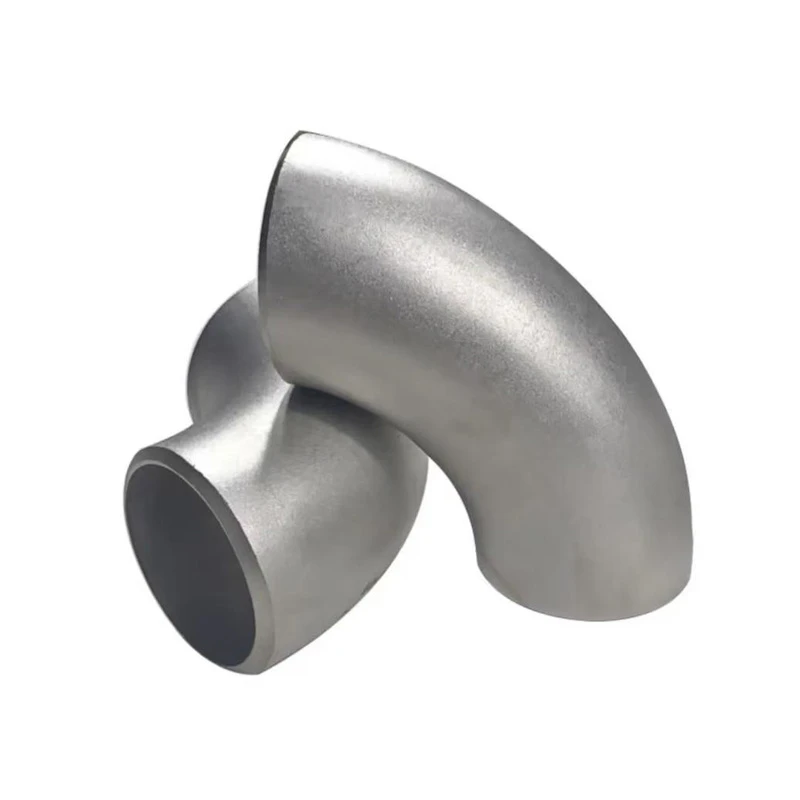
    Carbon Steel &stainless Steel Elbow Elbows are pipe fittings used to change the direction of pipelines in piping systems, commonly employed at pipeline bends. They are widely used in industries such as petroleum, chemical, and power. The common size range for elbows is DN15-DN2000, and typical angles include 45°, 90°, and 180°.
    VOIR TOUT
  • Tee Pipe

    Tuyau en T

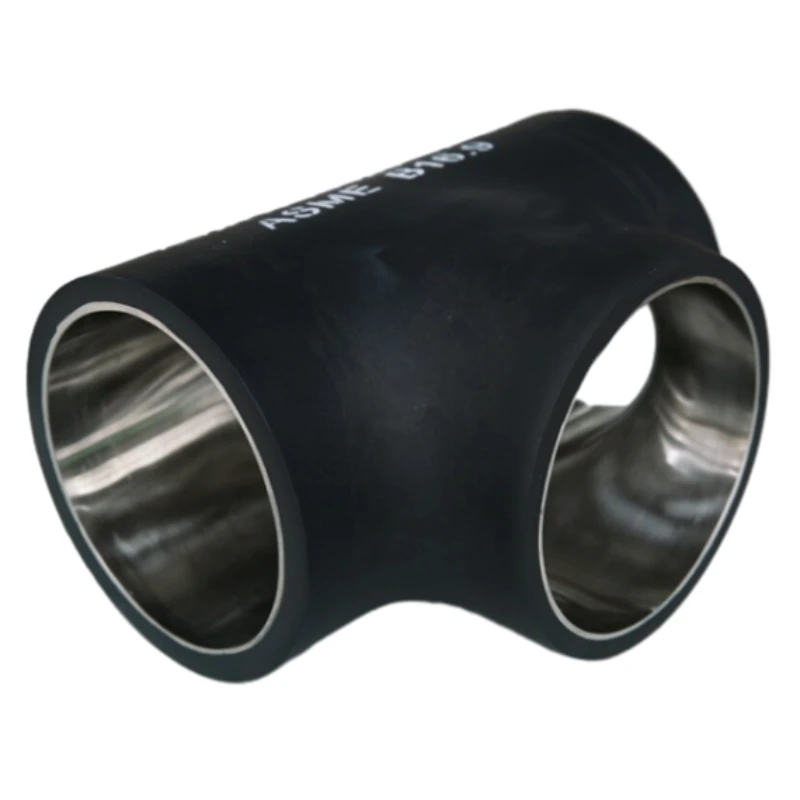
    Tee products are essential pipe fittings used to connect three sections of piping, forming a "T" shape. Available in various materials like carbon steel, stainless steel, and alloy steel, they are designed for use in systems requiring the diversion or junction of fluid flow.
    VOIR TOUT
  • Bend Pipe

    Tuyau courbé

    Le coude est un raccord essentiel utilisé pour modifier le sens d'écoulement dans un système de tuyauterie. Il permet des transitions fluides entre les sections de conduite, s'adaptant aux contraintes d'implantation, évitant les obstacles et optimisant les trajets d'écoulement. Les coudes sont conçus pour maintenir la vitesse du fluide et minimiser les pertes de charge tout en offrant l'angle de déviation nécessaire. Ils sont couramment utilisés dans divers secteurs, notamment le pétrole et le gaz, la pétrochimie, l'approvisionnement en eau et les systèmes CVC.
    VOIR TOUT

Le réducteur est poli par plusieurs processus.

Le réducteur est poli par plusieurs processus.
Nouvelles
L'entreprise considère la qualité des produits comme la vie de l'entreprise, établit un système de gestion de la qualité solide conformément aux exigences de l'industrie et des normes nationales, contrôle tous les aspects de l'entrée et de la sortie dans l'ensemble du processus, prête attention à chaque détail et garantit que le taux de réussite de la livraison des produits est de 100 %.
Comprehensive Guide to 4 Inch Steel Tubing Applications and Selection

Comprehensive Guide to 4 Inch Steel Tubing Applications and Selection

Mar.14,2026
4 inch steel tubing is a versatile material widely utilized across various industries, from construction and manufacturing to automotive and infrastructure. Its strength, durability, and cost-effectiveness make it a preferred choice for numerous applications. This article delves into the characteristics, applications, different types, and considerations when purchasing 4 inch steel tubing, offering a detailed overview for professionals and anyone seeking a deeper understanding of this essential material. Selecting the appropriate steel tubing can significantly impact the performance and longevity of your project. 4 inch steel tubing refers to hollow steel sections with an outer diameter of 4 inches. It’s commonly manufactured through processes like welding, seamless extrusion, or cold drawing. This tubing offers a high strength-to-weight ratio, making it ideal for structural applications.
Comprehensive Guide to 4 Inch Steel Pipe Applications and Specifications

Comprehensive Guide to 4 Inch Steel Pipe Applications and Specifications

Mar.12,2026
4 inch steel pipe is a fundamental component in a vast array of industries, from construction and infrastructure to oil & gas and water management. Its robust nature, durability, and cost-effectiveness make it a preferred choice for conveying fluids and gases. This article will explore the various applications of 4 inch steel pipe, delve into its specifications, and offer guidance on sourcing high-quality pipes from a reliable supplier like Lion Pipeline. Choosing the right steel pipe is crucial for the longevity and safety of your projects, so understanding its properties and uses is essential. The versatility of 4 inch steel pipe allows it to be utilized in numerous applications. In the construction industry, it is frequently used for structural supports, fencing, and handrails. The oil and gas sector relies heavily on these pipes for transporting crude oil, natural gas, and refined products. Water treatment facilities employ them for water distribution and wastewater management. Furthermore, they find application in irrigation systems, fire protection systems, and even in the manufacturing of furniture and other industrial equipment. Its strength and ability to withstand high pressures make it a dependable solution across diverse sectors.
Comprehensive Guide to 4 Inch Stainless Steel Pipe Properties and Applications

Comprehensive Guide to 4 Inch Stainless Steel Pipe Properties and Applications

Mar.11,2026
When sourcing materials for fluid transfer, structural support, or various industrial applications, 4 inch stainless steel pipe stands out as a versatile and reliable choice. This article provides a detailed overview of its properties, applications, grades, and considerations for optimal use. We’ll explore why stainless steel is often preferred over other materials and how to select the right pipe for your specific needs. Choosing the correct piping system is crucial for ensuring efficiency, safety, and longevity in any project. Stainless steel pipes, particularly those with a 4-inch diameter, possess a unique combination of properties that make them ideal for a wide range of applications. Corrosion resistance is paramount, thanks to the chromium content in the alloy, which forms a protective layer against environmental factors. High tensile strength and durability ensure longevity, even under pressure or demanding conditions. They also exhibit excellent temperature resistance, making them suitable for both high and low-temperature applications. Furthermore, stainless steel is hygienic and easy to clean, which is vital in industries like food processing and pharmaceuticals. The smooth internal surface minimizes friction loss, optimizing flow efficiency.
Comprehensive Guide to Durable 4 Inch Stainless Steel Exhaust Pipe Systems

Comprehensive Guide to Durable 4 Inch Stainless Steel Exhaust Pipe Systems

Mar.10,2026
When it comes to exhaust systems for vehicles, machinery, or industrial applications, the choice of materials and dimensions is critical. A 4 inch stainless steel exhaust pipe offers a compelling combination of durability, corrosion resistance, and performance. This article provides an in-depth look at the benefits, applications, and considerations when selecting this type of piping. We’ll explore why Lion Pipeline is a trusted source for high-quality stainless steel exhaust pipes. Choosing the right exhaust system component can significantly impact overall system efficiency and longevity. A 4 inch stainless steel exhaust pipe provides several advantages over other materials like aluminized steel or carbon steel. Stainless steel's inherent corrosion resistance is a major benefit, especially in harsh environments where exposure to moisture, salt, and chemicals is common. Its strength and durability ensure a long service life, reducing the need for frequent replacements.
Comprehensive Guide to 4 Inch Stainless Pipe Applications and Benefits

Comprehensive Guide to 4 Inch Stainless Pipe Applications and Benefits

Mar.09,2026
When selecting piping for a project, especially in industries demanding corrosion resistance and durability, 4 inch stainless pipe is a frequently considered option. This article provides a comprehensive overview of this type of piping, its applications, benefits, and key factors to consider when purchasing. We will delve into the various grades of stainless steel used, common applications, and why choosing a reputable supplier like Lion Pipeline is crucial for ensuring quality and compliance. Stainless steel pipes offer longevity and reduce maintenance, making them a cost-effective solution in the long run. 4 inch stainless steel pipe is renowned for its exceptional corrosion resistance, making it ideal for handling a wide variety of fluids and gases. Unlike carbon steel, stainless steel forms a passive layer of chromium oxide on its surface, protecting it from rust and corrosion. This is particularly important in harsh environments like those found in chemical processing, wastewater treatment, and marine applications. Furthermore, stainless steel pipes offer high strength and durability, capable of withstanding high pressures and temperatures.
Comprehensive Guide to 4 Inch Round Steel Tubing for Global Trade and Applications

Comprehensive Guide to 4 Inch Round Steel Tubing for Global Trade and Applications

Mar.08,2026
4 inch round steel tubing is a versatile structural component widely used across numerous industries, from construction and manufacturing to automotive and agriculture. Its strength, durability, and relatively lightweight nature make it an ideal choice for a wide range of applications. For businesses involved in international steel trading, understanding the nuances of this particular tubing is crucial for meeting client demands and ensuring successful transactions. This article will provide a comprehensive overview of 4 inch round steel tubing, covering its specifications, applications, common standards, and considerations for efficient global sourcing. The term “4 inch round steel tubing” refers to steel pipes with an outer diameter of four inches and a circular cross-section. These tubes are manufactured through various processes, including welding, drawing, and seamless extrusion. The choice of manufacturing method significantly impacts the tube’s strength, precision, and cost. Common steel grades used for 4 inch round steel tubing include A53, A106 (for higher temperature applications), and 1018 carbon steel. Wall thickness varies depending on the application, commonly ranging from schedule 40 to schedule 80, influencing the tube’s load-bearing capacity and weight. Understanding these factors is essential when sourcing steel tubing from international suppliers.
tel email tel top

Si vous êtes intéressé par nos produits, vous pouvez choisir de laisser vos informations ici et nous vous contacterons sous peu.